
Solar Panel Systems for Homes — Efficient Design, Installation and Cost Savings

You can cut your electricity bills and shrink your home's carbon footprint by installing a well-sized solar panel system that fits your roof and energy needs. Solar Panels London offers expert solutions with solar panels London UK homeowners trust for efficiency and reliability.
You will learn how systems work, what installation involves, and how to maintain panels to get the best performance. The practical details in this article will help you decide whether solar makes sense for your home and budget.
Key Takeaways
Solar panels London UK can reduce your energy bills and raise property value.
Understanding system size and output helps you choose the right setup.
Proper installation and simple maintenance keep panels performing well.

Understanding Solar Panel Systems for Homes
You will learn the main parts, how panels convert sunlight, system variations, and the differences between grid-connected and off‑grid setups. Focus on inverter types, battery options, performance factors, and practical trade‑offs for installation and operation.
Components of Residential Solar Panel Systems
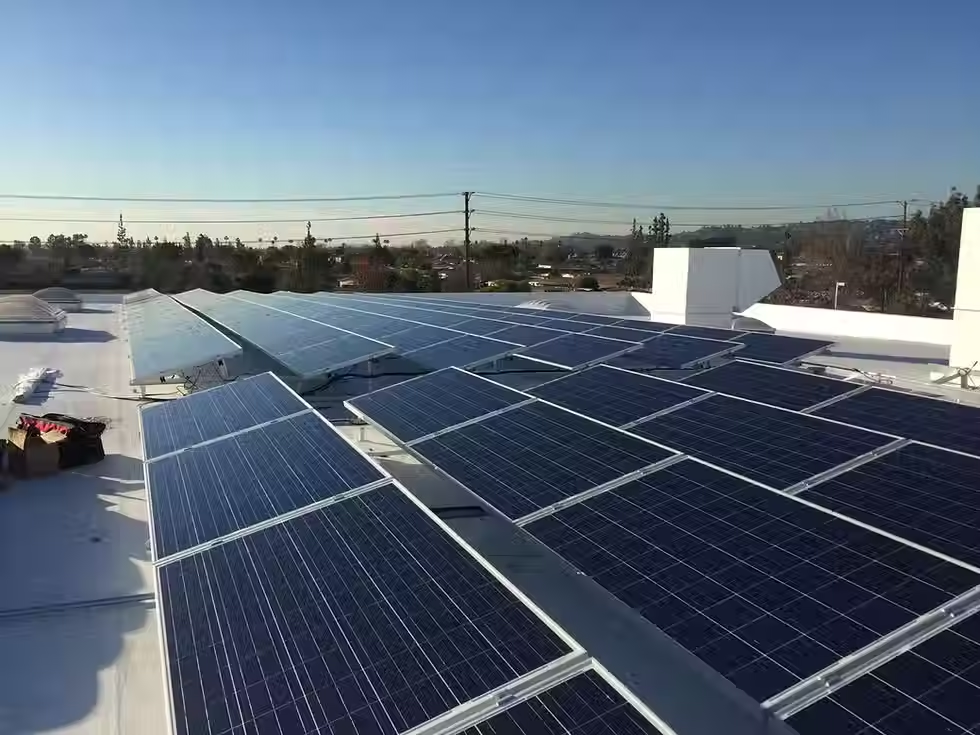
A typical system includes PV panels, an inverter, racking, wiring and safety devices, and often a battery. Panels (mono- or polycrystalline) generate DC electricity; inverters convert DC to AC for household use and grid export. Racking secures panels to pitched or flat roofs; microinverters or optimisers can be fitted per panel to mitigate shading losses. String inverters serve multiple panels together and are more cost‑effective on uniform roofs.
You also need a generation meter, AC/DC isolators, overcurrent protection and earthing. For battery systems include a charge controller or hybrid inverter and a battery management system (BMS). Monitoring hardware and smart meters let you track generation, consumption and export in real time.
How Home Solar Panels Work
Solar panels London UK contain silicon cells arranged in modules that produce DC current when sunlight excites electrons. The DC current flows to an inverter which transforms it into AC at the household voltage (typically 230 V in the UK).If your system produces more than you use, excess exports to the grid unless a battery stores it. When solar output falls, your home draws from the grid or batteries automatically.
System performance depends on panel orientation, tilt, shading, temperature and inverter efficiency. Installers model expected annual yield in kWh using roof geometry and local irradiance data to size systems against your household consumption.
Types of Solar Panel Systems
Roof-mounted systems are the most common: standard flush mounts, rail-less low-profile, and ballasted arrays for flat roofs. Ground‑mounted systems suit properties with ample land and allow optimal tilt and orientation.You can choose panel technology: monocrystalline for higher efficiency, polycrystalline for lower cost, or thin-film for flexible/low‑weight needs. Each choice affects roof coverage and output per square metre.
System configuration options include: string inverter systems, microinverter systems, and hybrid systems with integrated batteries. Microinverters give per-panel optimisation and simpler expansion; string inverters reduce upfront cost but can lose output from a single shaded panel. Hybrid systems combine generation and storage control in one unit.
Grid-Connected Versus Off-Grid Solutions
Grid-connected systems integrate with the public electricity network to import when needed and export surplus generation. They usually require a grid connection agreement, an export meter, and compliance with local G99/G98 regulations in the UK. Net metering or export tariffs affect your financial returns.
Off‑grid systems must supply all your demand using generation plus battery storage and often a backup generator. You will size batteries for autonomy days, oversize generation for low‑sun periods, and install charge controllers and robust monitoring. Off‑grid solutions provide independence where grid access is unavailable or unreliable.

Installation and Maintenance of Residential Solar Panels
This section explains how to assess your site, install panels safely, maintain system performance and select a certified installer. Expect practical steps, required measurements, safety checks, routine upkeep tasks and credential checks.
Site Assessment and System Design
Begin with an on-site survey that records roof orientation, tilt, usable area in square metres, shading from trees or neighbouring buildings and structural condition. Request a professional roof load calculation if your roof is older than 20 years or shows any sagging; this prevents overload and informs mounting choice.
Gather your annual electricity usage in kWh from two years of bills to size the array and estimate payback. Ask for a string-inverter versus microinverter comparison tailored to your shading pattern and future battery plans. Confirm cable runs, expected DC voltage, and inverter placement to minimise losses.
Insist on a detailed production estimate (kWh/year) using local irradiance data and system losses (soiling, temperature, mismatch). Check export limits and grid-connection requirements with your DNO to avoid surprises during commissioning.
Installation Process and Safety Standards
Installation starts with marking rafter positions and installing flashings or roof hooks that match your roof material (tiles, slate, metal). Ensure installers use corrosion-resistant stainless-steel fixings and rubber gaskets to preserve weatherproofing.
Mount panels with the correct torque settings and a continuous earthing system. Verify that DC cable runs use UV-rated, double-insulated cables in trunking; maintain minimum bend radii and avoid kinks. Label DC isolators, AC isolators and consumer unit changes clearly per local wiring regulations.
Confirm compliance with BS 7671 (IET Wiring Regulations), MCS 012 for system installation and any relevant building control approvals. Insist on fall-arrest equipment, PPE and a written method statement before work begins. Get photographs of key stages and a signed handover certificate at completion.

Long-Term Maintenance and Performance
Clean panels 1–2 times per year in dusty areas, using deionised water and a soft brush to avoid scratches and preserve the anti-reflective coating. Schedule cleaning early morning or late evening to reduce thermal stress; never use high-pressure washers or abrasive cleaners.
Monitor performance through the inverter portal or a dedicated monitoring system; log daily kWh and compare to the installer’s production estimate. Investigate consistent underperformance (>10% deviation) by checking for shading changes, inverter fault codes, connector corrosion or soiling.
Arrange an annual visual inspection: check for loose clamps, cable abrasions, water ingress at junction boxes and inverter ventilation. Replace failed microinverters or repair string fuses promptly. For battery systems, follow manufacturer intervals for state-of-charge settings, firmware updates and cell balancing.
For homeowners seeking reliable solar panels London UK, Solar Panels London provides professional design, installation, and ongoing support. Whether you want to maximise savings, boost your property value, or reduce your carbon footprint, Solar Panels London ensures your solar panels London UK system delivers optimal performance and return on investment.
For more insight, read our blogs on “Which solar panels are the best UK” and “Solar panels London” to choose the right system for your property.
Choosing a Certified Installer
When considering solar panels London UK, select an installer accredited by the Microgeneration Certification Scheme (MCS) and a member of a recognised trade body such as the Renewable Energy Consumer Code (RECC). Verify their MCS certificate number and confirm it covers both equipment and installation scope.
Ask for a minimum of three local references from systems installed at least two years prior and inspect performance data where available. Request a written quote that separates labour, equipment, scaffolding and post-installation monitoring costs.
Solar Panels London recommends confirming the installer provides a written warranty schedule: panel product warranty (typically 10–25 years), performance warranty (percentage output over time) and inverter warranty (5–12 years). Ensure they offer a commissioning report, as-built documentation, system manual and assistance with grid-connection paperwork for your solar panels London UK installation. Working with Solar Panels London ensures you receive expert guidance throughout your solar panels London UK project.


Comments