
Solar Panels for the Roof of a House: A Practical Guide to Installation, Costs and Efficiency

Thinking about solar panels for your roof can feel technical, but the choice often comes down to three clear facts: how much sunlight your roof gets, what system suits your energy needs, and the likely costs and savings. If your roof gets good sun exposure and you pick the right panels and home solar installer, you can cut energy bills and reduce your home’s carbon footprint. Solar Panel London can help you navigate these choices for optimal results.
You’ll learn what roof characteristics matter, how different panel types compare, and the practical steps for installation and planning permission where relevant. This will help you decide whether solar makes sense for your home and how to get the best return on your investment.
Key Takeaways
Assess sunlight and roof suitability before choosing panels.
Weigh expected savings against upfront costs and maintenance.
Select panels and a home solar installer that match your energy goals, such as Solar Panel London.

Benefits and Considerations of Solar Panels for Roofs
You’ll find practical savings, environmental benefits, and design considerations that affect installation, maintenance, and resale value. The points below focus on financial impacts, carbon reduction, visual effects, and homeowner priorities.
Key Advantages for Homeowners
Solar panels reduce your electricity bills by generating power during peak sunlight hours, often covering a large portion of daytime consumption. You can size a system to match rooftop area and typical daily usage; a 4 kW array on a south-facing roof of about 25–30 m² typically supplies 60–80% of an average UK household’s daytime needs.
Panels increase your energy independence and can keep critical loads running during short outages when paired with batteries. Low-maintenance PV modules generally need only annual cleaning and an occasional inverter check. Many installations qualify for local grants or favourable financing, which reduces upfront cost.
Potential Cost Savings Over Time
Upfront costs vary: typical UK residential systems (3–6 kW) range from £5,000 to £12,000 installed. Payback depends on electricity price inflation, system size, orientation and local irradiation; average payback commonly falls between 8 and 15 years in current market conditions. Feed-in tariffs are no longer widely available, so savings mainly come from avoided retail electricity purchases and any export payments.
Operational costs are low—panels degrade ~0.5–1% per year and inverters often need replacement after 10–15 years. Warranties often cover 25 years for performance and 10–12 years for inverters. Use a simple payback calculation: (installed cost − grants) ÷ annual bill savings = years to recoup.
Environmental Impact and Carbon Footprint
Solar PV displaces grid electricity, lowering your household’s carbon emissions. A typical 4 kW system in the UK can avoid roughly 0.8–1.0 tonnes of CO2 per year compared with average grid intensity, with larger savings if your grid electricity is carbon-intensive. Emissions from manufacturing are amortised over the panel’s lifetime; most panels reach “carbon payback” within 1–3 years.
End-of-life recycling rates are improving; check home solar installer policies and take-back options to reduce waste. Battery storage increases system flexibility but adds embodied carbon and recycling considerations. Choosing reputable manufacturers with transparent lifecycle data reduces environmental risk.

Aesthetic and Property Value Implications
Roof-mounted panels alter your home’s appearance; low-profile, integrated or colour-matched panels minimise visual impact. You should consider roof pitch, ridge/valley placements and visible wiring to keep the installation tidy. If you live in a listed building or conservation area, planning consent may be required and designs may be restricted.
Solar can enhance resale value where buyers expect lower running costs. Estate agents often report that energy-efficient homes attract more interest, but market effects depend on local buyer preferences. Provide documentation—installation certificates, warranties and performance data—to reassure future buyers and speed up valuation.
Choosing and Installing the Right Solar Panels
You’ll learn the most important factors for selecting panel type, checking roof suitability and orientation, and what to expect during professional installation. The guidance focuses on performance, cost, roof structure, planning permission, and installation steps.
Types of Solar Panels Suitable for Residential Roofs
Most homes use three panel types: monocrystalline, polycrystalline, and thin-film. Monocrystalline panels offer the highest efficiency (18–22% typical), a smaller footprint, and longer warranties, making them best for limited roof space. They cost more per watt than polycrystalline but produce more energy per square metre.
Polycrystalline panels are lower cost with efficiencies around 15–17%. Choose these if you have ample roof area and want lower upfront expense. Thin-film panels are lightweight and flexible but need larger arrays and often carry shorter warranties.Also consider panel dimensions, frame colour, and anti-reflective coating for aesthetics and light capture. Compare manufacturer datasheets for rated output at STC and temperature coefficients for realistic production in your climate.

Evaluating Roof Compatibility and Orientation
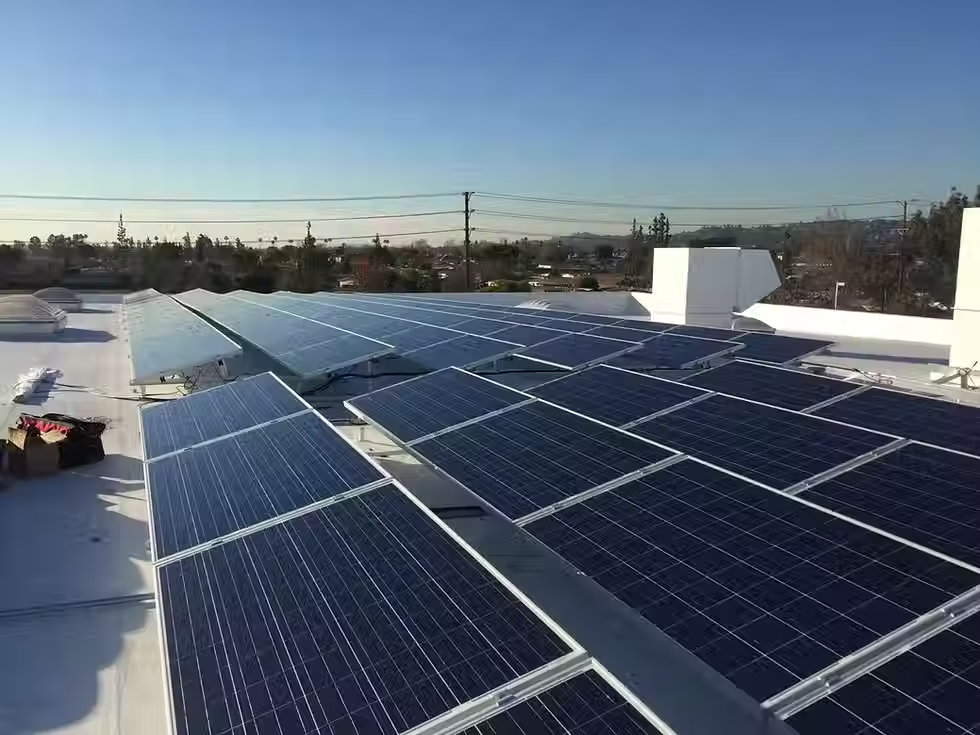
Check roof azimuth, tilt, material, and structural condition before ordering panels. In the UK, a south-facing roof at 30–35° tilt yields near-optimal annual generation; east or west orientations reduce output by roughly 10–25% depending on tilt and shading. Flat roofs need mounting rigs to set tilt; that affects wind load and planning requirements.
Assess shading from trees, neighbouring buildings, chimneys, and dormers at multiple times of day and year. Have a structural engineer or home solar installer like Solar Panel London verify rafter spacing, roof load capacity, and any necessary reinforcement. Confirm roof covering type (tiles, slate, metal) to choose appropriate mounting systems and avoid damaging waterproof layers.
For the best results, work with an experienced home solar installer such as Solar Panel London, who can guide you through every step of the process, from initial survey to final connection.
For more guidance, read our blogs “Is my home suitable for solar panels” and “Installing solar battery”.
Installation Process and Professional Guidance
Hire an MCS-certified home solar installer or equivalent, such as Solar Panel London, who provides a written quote, equipment spec sheet, and expected annual yield. Typical installation steps with a professional home solar installer like Solar Panel London include a site survey, electrical design, mounting system installation, panel installation, inverter and cabling connection, and commissioning with generation monitoring setup. Expect a 1–3 day physical install for most domestic systems, plus certification and meter updates that can take several weeks.
Ensure your home solar installer, for example Solar Panel London, secures Building Regulation compliance and, where required, planning consent or listed-building approvals. Ask Solar Panel London for warranties covering panels, inverters, and workmanship, along with performance guarantees or production estimates based on your postcode. Retain documentation for future sale value and for registering for export tariffs or grid connection.


Comments