
Solar Panel Installation Process: From Survey to Switch-On

A solar panel installation follows a set sequence: survey, design, permissions, mounting, wiring, testing and switch-on. Most domestic installs take one to two working days on-site, though the full journey from first enquiry to a certified system can run two to six weeks once surveys, DNO paperwork and scaffolding bookings are accounted for, as outlined in this breakdown of typical UK timelines.
If you're weighing up a solar installation London homeowners have come to expect a fairly standardised process, whatever roofline or property type you're working with. The steps are consistent nationwide, but London's mix of terraced roofs, conservation areas and tighter DNO capacity in some boroughs means a solar installation London property often needs a closer look at planning rules and grid checks before work starts.
Firms such as Solar Panels London handle this from the first site visit through to the final export registration, coordinating scaffolding, electrical certification and grid sign-off so you don't have to chase each stage yourself. Knowing what happens at each point, and why, helps you ask sharper questions when comparing quotes for a solar installation London-wide.

Before Installation: Surveys, Design and Permissions
Every solar installation London or otherwise starts with a technical survey that checks your roof's condition, orientation and shading before anyone commits to a design. This stage also covers system sizing, equipment selection, planning rules and the network application that has to clear before scaffolding goes up.
How Is Your Property Assessed for Solar?
A surveyor inspects your roof structure, rafters, covering material and orientation to confirm it can safely take panels. Shading from chimneys, trees or neighbouring buildings gets mapped, since even partial shade on one panel can drag down output across a whole string.
Roof pitch and orientation are checked against south-facing ideals, though east-west arrays remain viable for many London terraces. The surveyor also examines your existing consumer unit and meter setup, as noted in this step-by-step guide to how solar panels are installed, because older wiring sometimes needs upgrading before an inverter can be fitted safely.
Sizing the System and Choosing Equipment
System size is based on your annual electricity usage, available roof space and budget, not a generic package. Installers calculate expected generation using your roof's pitch, orientation and shading data gathered at survey.
Equipment choice matters here too. Panel wattage, inverter type (string or hybrid) and battery capacity all get matched to your usage pattern, with hybrid inverters increasingly specified where a battery is part of the plan, as described in this workflow covering Tesla Powerwall, Fox ESS and Sigenergy integration.
Planning Permission, DNO Applications and Site Preparation
Most domestic solar falls under permitted development, so formal planning permission isn't usually required unless your property is listed or sits within a conservation area, which is common across parts of London. Where that applies, a solar installation London project may need extra sign-off from the local planning authority.
Every system also needs a Distribution Network Operator (DNO) application. Small systems typically fall under the simplified G98 notification process, while larger arrays need G99 approval before connection, as explained in this guide to DNO paperwork and MCS certification. Site preparation, including scaffolding bookings and material deliveries, follows once approvals are confirmed.

Installation Day: Mounting, Wiring and Inverter Setup
Installation day itself usually takes one to two days, with scaffolding erected beforehand and roof work running alongside electrical work. Your power supply is only interrupted briefly at the final connection stage, typically under an hour, according to this account of what actually happens on installation day.
Scaffolding, Roof Protection and Mounting Rails
Scaffolding goes up a day or two before the crew arrives, giving safe access to the roof and protecting both installers and roof tiles. Mounting rails are then fixed to the rafters through the roof covering, using flashing to keep the fixing points weatherproof.
For a solar installation London terrace or semi-detached property, scaffolding often needs to account for shared boundary walls and narrow access, so timing this stage correctly avoids delays once the crew is on-site.
Fitting Panels and Completing DC Wiring
Panels are clipped onto the mounting rails and wired together in series to form a string, then connected via DC cabling that runs from the roof down to the inverter location. Cabling is routed and clipped to protect it from weather and rodent damage.
Earthing and bonding are carried out at this stage too, a detail that's easy to overlook but essential for electrical safety across the whole array.
Installing the Inverter, Battery and AC Connections
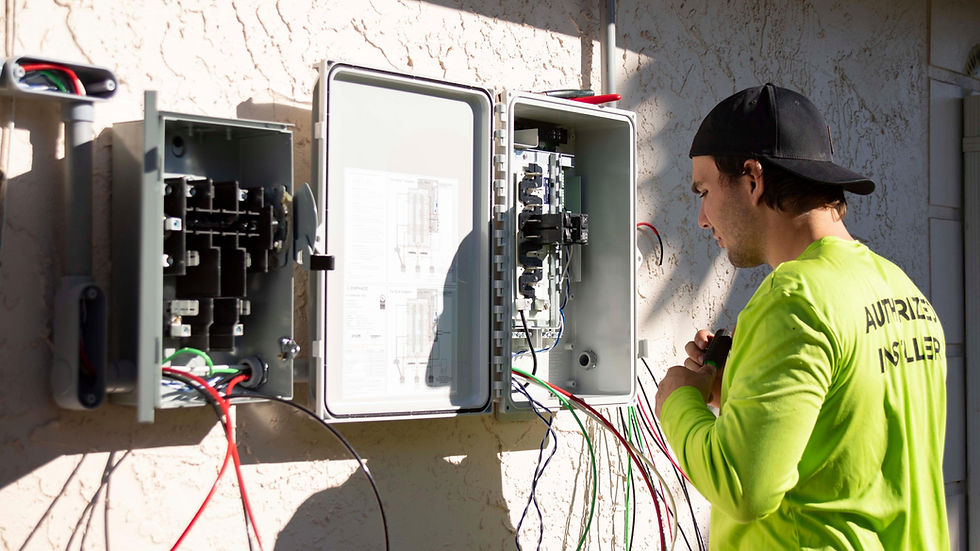
The inverter, usually fitted in a garage, loft or utility space, converts the DC electricity generated by the panels into AC electricity your home can use. Where a battery is specified, it's installed alongside the inverter and wired in before the AC connection is made.
The final AC connection links the inverter to your consumer unit and export meter. This is the point where your supply is switched off briefly, as covered in this description of installation day timings, before power is restored with the new system live.
Testing, Approval and System Activation
A system only gets switched on once it passes electrical safety checks and clears the required grid and certification steps. This covers commissioning tests, DNO and export registration, and the handover documents you'll need for warranties and future maintenance of the solar installation London.
Electrical Safety Checks and Commissioning
Installers run insulation resistance tests, polarity checks and earth continuity tests on the DC and AC sides before energising the system. Commissioning confirms the inverter is configured correctly and communicating with any battery or monitoring hardware fitted.
For larger commercial arrays, DC string testing alone can take one to two days on a 100 kW system, with AC checks and inverter configuration adding further time, as detailed in this overview of commissioning standards. Domestic systems move through this far faster, usually within a matter of hours once wiring is complete.
Grid Approval and Export Registration
Your installer notifies the DNO once the system is connected, completing the G98 or G99 process required before you can legally export electricity. MCS certification is issued at this point too, a document you'll need to access the Smart Export Guarantee (SEG).
SEG registration lets you get paid for surplus electricity sent back to the grid, and most suppliers require the MCS certificate before accepting an application, as noted in this guide covering MCS certification and SEG setup.
Monitoring, Handover and Ongoing Care
Handover includes setting up your monitoring app, so you can track generation, battery charge and export figures from a phone or tablet. Installers walk you through the system controls and hand over warranty documents, the EICR (Electrical Installation Condition Report), and your MCS certificate.
Ongoing care is minimal: panels need occasional cleaning and a visual check after storms, with most warranties covering panels for 20 to 25 years and inverters for 5 to 10 years.
Looking for a trusted installer? Explore our guide to Solar Panel Companies London to learn more about choosing the right company for your solar project.
A Smooth Route to Safe Solar Generation
Getting from survey to switch-on comes down to sequence: assessment and design, permissions and DNO approval, physical installation, then testing and certification before export begins. Each stage depends on the one before it, which is why rushing scaffolding bookings or DNO applications tends to cause delays further down the line.
For anyone comparing quotes for a solar installation London-wide, ask installers how they handle DNO timelines and conservation area checks specifically, since these are the steps most likely to affect your schedule in the capital. Companies like Solar Panels London manage this coordination directly, which removes much of the administrative back-and-forth for homeowners.
A well-run solar installation London project should leave you with a working system, full certification, and a clear monitoring setup within weeks of your first survey, not months of chasing paperwork.


Comments