
How Many PV Panels Do I Need: Calculating Panels for Your Home Energy Requirements

To cover a typical UK household's electricity use (about 3,000–4,000 kWh per year), you will likely need roughly 10–16 standard 350 W PV panels, but your exact number depends on your consumption, roof space, and local sunlight. Estimate your household's annual kWh, divide by a panel's annual output in your location, and add a margin for system losses to find the right panel count.
You can quickly refine that estimate by checking past electricity bills, measuring available roof area, and considering panel orientation and shading. A slightly larger system can reduce grid dependence, while optimising layout and inverter sizing improves performance without unnecessary panels. For reliable installation and advice, consider working with a professional PV solar installer like Solar Panels London.
Key Takeaways
Base the panel count on your annual kWh usage and local panel output.
Check roof space and orientation to confirm physical feasibility.
Optimise system design for better performance before adding extra panels.

Understanding Solar Panel Sizing
You will learn how to calculate panel count from your electricity use, which site and system factors change that number, and how different panel types influence size and output. Read the figures and examples to apply them directly to your home.
Assessing Your Energy Consumption
Start with your annual and monthly electricity use in kilowatt‑hours (kWh). Check 12 months of bills or export data from your smart meter; average monthly use gives a reliable baseline. Example: if your average monthly use is 350 kWh, your annual total is 4,200 kWh.
Convert consumption into required array output by dividing annual kWh by expected annual production per kW of installed PV at your location (kWh/kW). In the UK, typical values range from 800 to 1,100 kWh/kW depending on region and tilt.Calculation: Required system size (kW) = Annual consumption (kWh) ÷ Site production (kWh/kW).
Account for self‑consumption and export. If you only want to offset part of your bill, size the system accordingly. Include future changes: electric heating, EV charging, or efficiency measures alter required capacity, consider all of this with your PV solar installer.
Factors Affecting PV Panel Quantity
Panel count depends on required system kW divided by panel wattage (Wp). If you need a 4 kW system and use 400 W panels: 4,000 W ÷ 400 W = 10 panels. Use exact panel Wp ratings from datasheets for precise counts.Other important factors:
Roof area and orientation: south‑facing, 30–35° tilt is ideal in the UK; east/west increases panel count for similar output.
Shading: even small shade on one panel can reduce string output; use microinverters or optimisers if shading is present.
Site losses and system inefficiencies matter. Typical derating factors: inverter efficiency (~96–98%), soiling (2–5%), temperature losses (5–10%), and wiring losses (~1–3%). Apply an overall system loss factor (often 0.75–0.85) when converting theoretical kW into real production.
Types of PV Panels and Their Efficiency
Panel efficiency determines how much power you get per square metre, affecting the number of panels needed. Common domestic panels:
Monocrystalline: 18–23% efficiency, higher output per panel, smaller arrays.
Polycrystalline: 15–18% efficiency, lower cost but larger area needed.
Thin‑film: 10–12% efficiency, rarely used for limited roof space.
Choose panel wattage and efficiency based on your roof area and budget. Example table:
Panel type | Typical efficiency | Typical domestic Wp |
Monocrystalline | 18–23% | 360–430 W |
Polycrystalline | 15–18% | 250–350 W |
Thin‑film | 10–12% | 100–200 W |
Higher‑efficiency panels reduce panel count but cost more per Wp. If roof space limits you, prioritise higher efficiency; if space is ample, lower‑cost panels can meet your kWh target with more modules.
Calculating How Many PV Panels You Need
You will estimate daily energy demand, local solar resource, roof space and orientation, and account for system losses to size a PV array that meets your needs. Use measured household consumption, local peak sun hours, panel wattage, and realistic loss factors to calculate panel count. For a seamless process, consult a PV solar installer such as Solar Panels London.
Estimating Daily Solar Energy Production
Start with your average daily electricity use in kilowatt‑hours (kWh). Use 12 months of bills to find a reliable daily average; seasonal peaks matter.Convert that daily kWh target into required solar array output by dividing by the average daily full‑sun equivalent hours for your location (see next subsection).
Choose a panel rated wattage you plan to install (for example, 360 W). Convert panel rating to kW (360 W = 0.36 kW). Then divide the required array kW by the panel kW to get a raw panel count.Example: if you need 10 kWh/day and have 4 peak sun hours, required array = 10 kWh ÷ 4 h = 2.5 kW; panels = 2.5 kW ÷ 0.36 kW ≈ 7 panels.
Analysing Sunlight Hours and Location
Use local solar data — peak sun hours (PSH) — rather than vague sunlight estimates. PSH is the equivalent number of hours per day when irradiance equals 1,000 W/m². Typical UK values range 2.5–4.0 PSH depending on season and region; southern England will be higher than Scotland.
Find PSH from a reliable source (Met Office, PVGIS, or local solar maps). Use monthly PSH to size for winter or average as required.If you want winter autonomy, use lowest monthly PSH; for annual average production, use the mean PSH. Adjust calculations for shading from nearby trees, chimneys or adjacent buildings, which can reduce effective PSH considerably, the expertise of a PV solar installer is beneficial in these considerations.
Considerations for Roof Space and Orientation
Measure available usable roof area in square metres and note azimuth and tilt angles. South‑facing roofs at a tilt near your latitude give the best year‑round yield. East/west orientations produce less per panel but can suit peak morning/evening demand.
Calculate how many panels fit physically: Panel area (m²) × quantity ≤ usable roof area minus setbacks and ventilation gaps. Allow 5–10% spacing for access and wind loads.Also check structural loading, planning constraints and roof obstructions. If roof space is limited, consider higher‑efficiency panels (more W/m²) or a mix of roof and ground‑mounted arrays.
Applying System Losses and Safety Margins
Apply realistic loss factors: inverter efficiency (typically 96–98%), temperature losses, soiling, wiring, mismatch, and shading. A conservative combined loss factor of 15–20% is common for planning in the UK.Adjust required array size by dividing the calculated array kW by (1 − total loss fraction). Example: 2.5 kW ÷ 0.82 (18% losses) ≈ 3.05 kW.
Add a safety margin of 5–10% if you expect future consumption increases (EV charging, heat pump) or if you want to ensure annual production targets. Round panel count up to whole panels and verify against roof space and budget before finalising.
Optimising Your PV System Design
You will trade cost, roof space and panel efficiency to meet your daily kWh target and desired payback period. Plan string or microinverter layouts, battery capacity if needed, and equipment quality to avoid expensive rework later. For expert system design, reach out to Solar Panels London, a trusted PV solar installer.

Balancing Budget and Performance
Decide the fraction of high-efficiency panels versus standard panels based on available roof area and budget. If you have limited roof space, choose panels ≥ 370 W and higher efficiency (20%+) to hit a 6–8 kWh/day target with fewer modules. If roof space is abundant, lower-cost 300–330 W panels may lower upfront cost while increasing panel count.
Include inverter choice and warranty differences in your cost analysis. String inverters are cheaper per watt but can lose output from shading; microinverters or optimisers cost more but improve real-world yield and simplify panel-level monitoring. Compare lifecycle cost: equipment price + expected degradation + maintenance.
Use a simple payback calculation to set performance targets:
Annual production (kWh) = system kW × local solar yield (kWh/kW/year).
Payback years = system cost / (annual production × electricity price).
Factor in installation constraints like roof orientation, tilt, shading and local regulations; these affect both panel count and mounting cost. For a smooth installation and optimal results, choose Solar Panels London as your PV solar installer.
For a complete overview, explore our guides on Are PV panels worth it? and PV installations to plan your system with confidence.
Future-Proofing for Increased Demand
Estimate future load growth from EVs, heat pumps, or expanding household use. Add 20–40% capacity margin if you expect a 10–20 kWh/day increase within 5–10 years. That margin lets you avoid full repanelling later and supports partial battery integration.
A PV solar installer from Solar Panels London can design the electrical layout to allow straightforward expansion. Reserve conduit runs and space in the consumer unit, and choose an inverter with AC-coupling or additional MPPTs so you can add panels or batteries without replacing core equipment. Record panel orientation and string configuration for future PV solar installer reference.
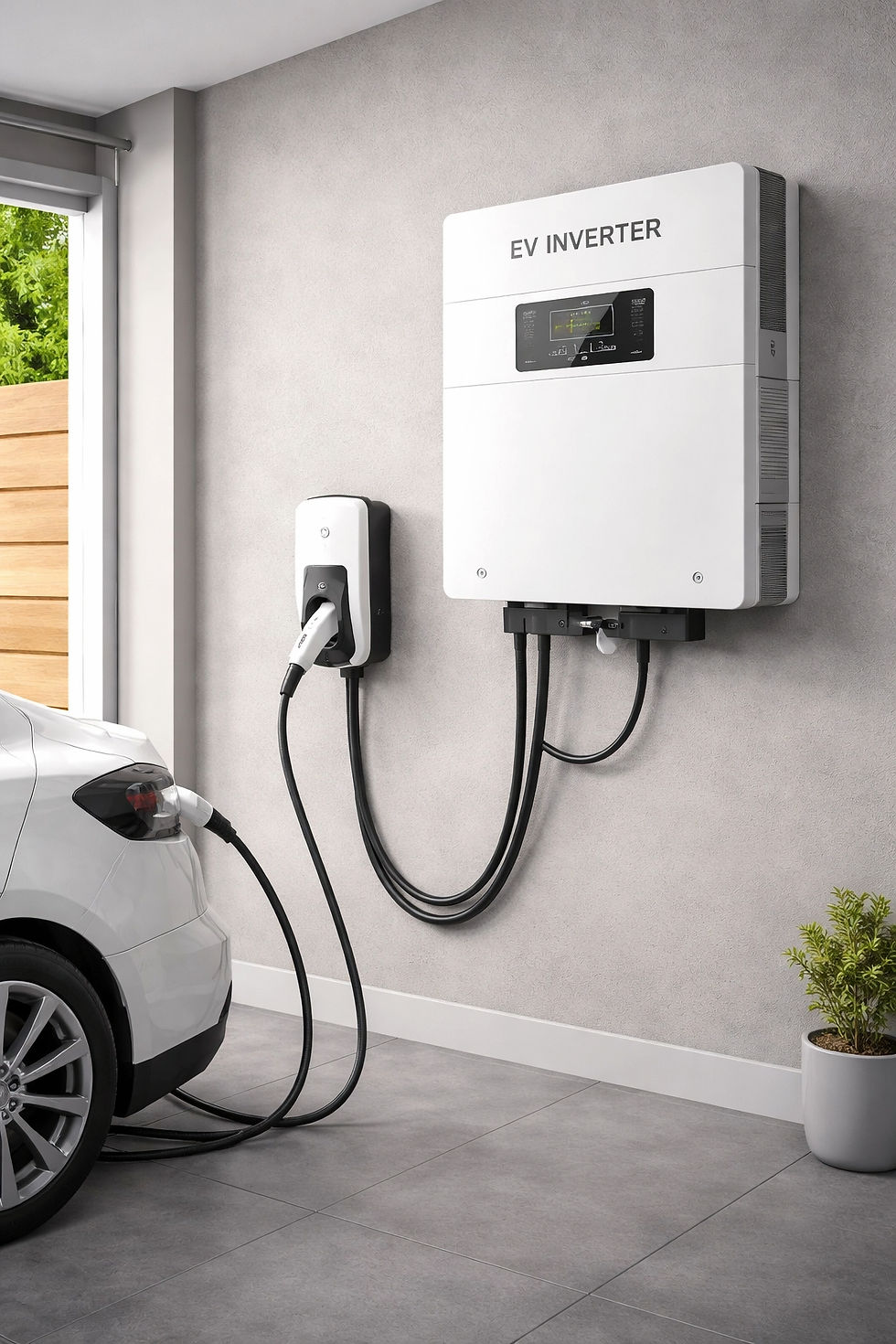
Consider battery-ready systems and export limitations. If you plan an EV charger, size the inverter and cable routes to handle simultaneous charging and PV export, and check local export grid constraints that might require export limitation equipment. Solar Panels London recommends consulting a PV solar installer to ensure your system is ready for future upgrades and increased demand.


Comments