
Commercial Solar Panels UK: Cost, Savings and Installation Guide
Commercial solar panels for businesses UK can cut your energy bills and lower your business’s carbon footprint while paying back the investment over several years. You can expect reliable energy savings, reduced operating costs, and a clear payback period when you choose the right system for your site and usage.
You’ll want to weigh system size, installation costs, local regulations and ongoing maintenance so the panels actually deliver the savings you expect. Practical choices on financing, warranties and installer selection determine whether the project boosts your bottom line or becomes a hassle.
Key Takeaways
Commercial solar offers predictable cost savings and reduced energy spending.
Proper planning and financing shape the project’s return on investment.
Compliance and maintenance keep panels performing and warranties valid.
Commercial Solar Panels in the UK
You’ll find options that suit rooftops, car parks and ground-mounted arrays, along with clear business benefits like lower energy costs and improved ESG credentials. The subsections explain panel types, advantages for different business sizes, and current adoption trends across UK sectors.

Types of Commercial Solar Panels
You can choose from monocrystalline, polycrystalline and thin‑film technologies depending on roof space, budget and efficiency needs.
Monocrystalline: highest efficiency (around 18–22% typical commercial modules), best for limited roof area, higher upfront cost.
Polycrystalline: lower efficiency (14–18%), cheaper per watt; suited to large flat roofs where space is abundant.
Thin‑film (CIGS, CdTe): lighter and flexible, lower efficiency but useful for curved surfaces or integration where weight matters.
Mounting and balance-of-system choices matter: fixed tilt frames cost less, while adjustable or tracking systems boost yield but add complexity. For flat roofs, consider ballast-mounted or penetration-mounted racking with wind uplift calculations. You should check panel warranties—performance guarantees typically 25 years—and inverter options (string versus central versus microinverters) to match system size and maintenance preferences.
Key Advantages for Businesses
You’ll cut electricity bills, by installing solar panels for businesses UK, immediately by generating on-site power and reduce exposure to wholesale price volatility. Typical payback varies widely; many UK commercial installations target 3–8 year payback before considering export revenues or tax reliefs.
Installing solar strengthens sustainability reporting and can improve green credentials for customers, investors and tenders. You may qualify for business tax allowances (capital allowances where applicable) and can pair systems with commercial batteries to shift self‑consumption and reduce peak charges. Solar also frees roof space for other uses while often increasing property value. Operational impacts include minimal moving parts and predictable maintenance: regular cleaning and inverter checks form most routines.
Current Trends in UK Solar Adoption
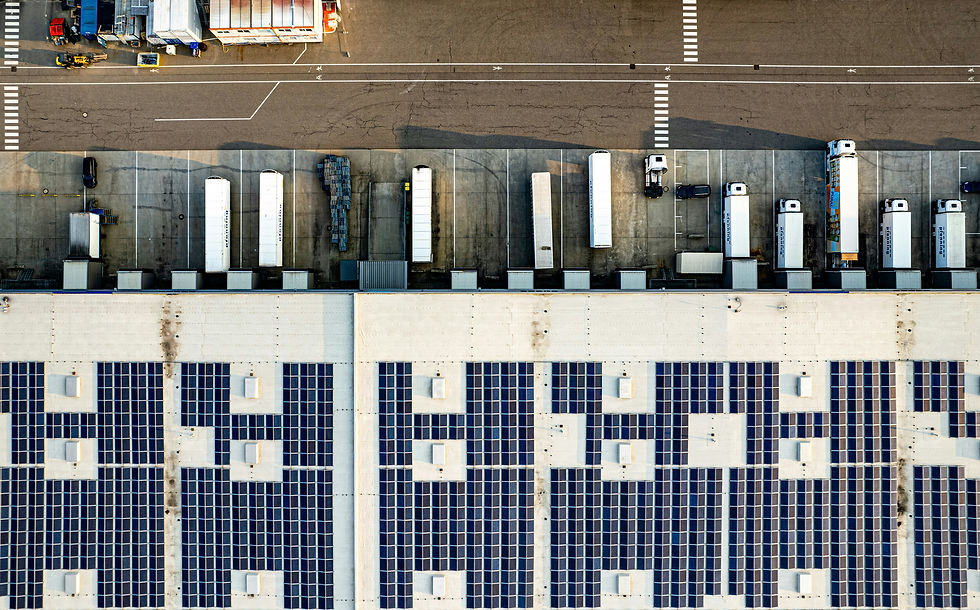
You’ll see rapid growth in rooftop and car park canopy projects across retail parks, warehouses and university campuses. Larger commercial fleets now combine solar with batteries and smart energy management to avoid peak demand charges and to provide resilience.
Regulatory and market shifts influence uptake: decreasing module costs, improved financing models (power purchase agreements, leasing) and corporate net‑zero targets drive deployments. Local planning is simpler for rooftop systems, accelerating rollout, though grid connection constraints and export limitations affect larger sites. Expect rising interest in bifacial modules and agrivoltaics where businesses seek additional yield or multifunctional land use.
Cost, Financing, and Return on Investment
This section explains what you will pay upfront, available public support and financing options, and how long before your system saves more than it costs. Expect capital costs, grant eligibility, tax considerations, loan structures, and practical payback examples for UK commercial settings.

Initial Installation Costs
Installation typically ranges from about £600 to £1,200 per kWp for medium to large commercial roofs, depending on panel type, inverter choice and mounting complexity. For a 100 kWp system you should budget roughly £60,000–£120,000 excluding VAT and roof works.Roof condition, bespoke steelwork, scaffolding, and electrical upgrades can add £5,000–£30,000. Flat roofs often require ballasted frames or tilt systems which increase costs; pitched roofs may be cheaper if access is straightforward.You must factor in ongoing costs such as monitoring, insurance increases and occasional maintenance—plan for roughly £100–£300 per year per 100 kWp for routine checks and inverter warranties. Warranties commonly cover panels for 25 years and inverters for 5–12 years; budget for inverter replacement mid-life.
Government Incentives and Grants
The UK no longer has the same Feed-in Tariff, but incentives still exist for commercial projects through schemes like the Smart Export Guarantee (SEG) and local business energy grants. SEG requires suppliers to pay for exported electricity; rates vary widely, typically 1–6p/kWh, so check current offers from licensed suppliers. Regional combined authority or Local Enterprise Partnership (LEP) grants sometimes provide capital funding or interest-rate support for energy projects. You can access the UK Government’s Business Energy Efficiency Programme or local low-carbon funding streams; eligibility often depends on business size, sector and project scale. Other supports include Enhanced Capital Allowances and potential corporation tax relief for qualifying plant and machinery. VAT on commercial solar is standard at 20%, though certain building-integrated work may be zero-rated—confirm with an accountant before budgeting for solar panels for businesses UK.
Payback Period and Long-Term Savings
Typical payback periods for UK commercial solar range from 4 to 12 years depending on electricity offset, export income and capital cost. If your site consumes most generated power on-site and pays 20–40p/kWh for grid electricity, expect shorter payback nearer 4–7 years for well-sized systems.Calculate ROI using delivered kWh saving values: annual saving = system output (kWh) × proportion used on-site × avoided grid price (pence/kWh) + exported kWh × SEG rate. For example, a 200 kWp system producing 170,000 kWh/year with 70% self-consumption and 15p/kWh grid price yields ~£17,850 saved on consumption plus export revenue.Factor in replacement of inverters, potential performance degradation (~0.5–0.8%/year), and financing costs. Leasing or PPA models reduce upfront cost but extend payback via ongoing fees; loan finance raises early cash outflow but preserves long-term savings and tax advantages.
Regulations, Standards, and Maintenance
You need to navigate planning rules, technical standards and regular upkeep to keep commercial solar systems legal, efficient and safe. Follow specific planning routes, meet established product and installation standards, and schedule maintenance tasks that protect performance and warranties.
Planning Permission and Compliance
Most rooftop solar Panels for businesses UK installations on commercial buildings qualify as permitted development, so you often won’t need full planning permission. You must check local planning authority guidance for listed buildings, conservation areas, or if panels protrude above the highest part of the roof; those situations commonly require an application.
For ground-mounted arrays, or if you change building use or significantly alter roof structure, submit a planning application. You will also need to demonstrate compliance with Building Regulations for structural integrity, fire safety and electrical safety; installers typically provide a building control submission or certificate.
You must notify Distribution Network Operators (DNOs) for export and connection agreements when capacity or export limits are exceeded. If you export more than minimal power, you may need a formal grid connection offer and an export agreement with a licensed supplier. Keep copies of planning decisions, building control notices and DNO correspondence for audits and lease/finance requirements.
Quality and Performance Standards
Ensure panels and inverters meet recognised standards: PV modules should carry IEC 61215 / IEC 61730 certification and inverters should meet IEC 62109 and G98/G99 grid codes. These standards demonstrate durability, electrical safety and grid compatibility; always request test certificates from manufacturers.
Check product warranties and performance guarantees. Typical PV module warranties include a 10–12 year product warranty and a 25–30 year linear performance warranty; inverters usually have 5–15 year warranties, extendable for an extra fee. Confirm warranty terms cover commercial use and specify conditions that might void cover, such as unauthorised modifications or poor maintenance.
Insist on accredited installers with MCS (Microgeneration Certification Scheme) or equivalent certification and membership of recognised trade bodies like REA or Solar Energy UK. Use verified performance data (SRRL or P90 estimates) and include commissioning tests, performance ratio figures and shading analysis in your project documentation.
Why Choose Solar panels London for Your Business?
If you’re considering Solar panels for businesses UK, Solar panels London provides tailored solutions that address the unique needs of commercial clients. Solar panels London specializes in designing and installing Solar panels for businesses UK, ensuring maximum savings and compliance with all UK regulations. By partnering with Solar panels London, your business benefits from expert guidance, quality products, and ongoing support.
Solar panels London helps businesses across the UK unlock the advantages of Solar panels for businesses UK, from reduced energy costs to stronger sustainability credentials. Whether you’re operating a warehouse, office, or retail park, Solar panels London delivers reliable, efficient, and future-proof Solar panels for businesses UK.
For broader insights, explore our guides on Solar panel for businesses and Solar panels for warehouses to discover tailored solutions for different commercial needs.
Maintenance Best Practices
Set up a maintenance schedule for Solar panels for businesses UK that includes visual inspections, electrical testing, and panel cleaning. Inspect mounting hardware, cabling, and junction boxes twice yearly, and commission electrical tests (insulation resistance, earth continuity) at least every 3–5 years or per warranty requirements.
Monitor system performance continuously through a monitoring platform that records energy yield, inverter alerts, and string-level data where available. Create KPI thresholds (for example, >90% expected yield) and automatic alerts so you can act on underperformance promptly. Solar panels London recommends using advanced monitoring tools for Solar panels for businesses UK to ensure maximum efficiency.
Arrange professional servicing for inverter firmware updates, thermal imaging, and I–V curve testing annually or after significant weather events. Keep a log of all maintenance activities, warranties, certificates, and DNO communications; lenders and insurers will request this documentation during audits or claims. Solar panels London advises that detailed records help maintain the value and performance of Solar panels for businesses UK.


Comments