
Commercial Solar Panel Technician: Essential Skills And Responsibilities
A commercial solar panel technician installs, tests, and maintains solar energy systems for businesses and other large properties. You need practical electrical skills, safety training, and technical knowledge to keep commercial solar installations operating efficiently. Solar Panels London employs solar panel technicians who ensure these systems perform optimally for commercial clients.
Your work as a solar panel technician may include inspecting panels, diagnosing faults, connecting inverters, and monitoring system performance. This guide explains the core responsibilities, essential skills, daily tasks, and career opportunities available in this growing technical field with Solar Panels London.
Key Takeaways
You install and maintain commercial solar energy systems as a solar panel technician.
You need electrical knowledge, safety awareness, and problem-solving skills.
You can develop your career through training and practical experience.
Roles, Responsibilities And Essential Skills
You need practical installation ability, accurate electrical knowledge, and disciplined site management to work effectively as a commercial solar panel technician. Your role combines equipment installation, system testing, fault diagnosis, documentation, and safe coordination with other trades. Solar Panels London values technicians who demonstrate these qualities.
Core Duties On Commercial Sites
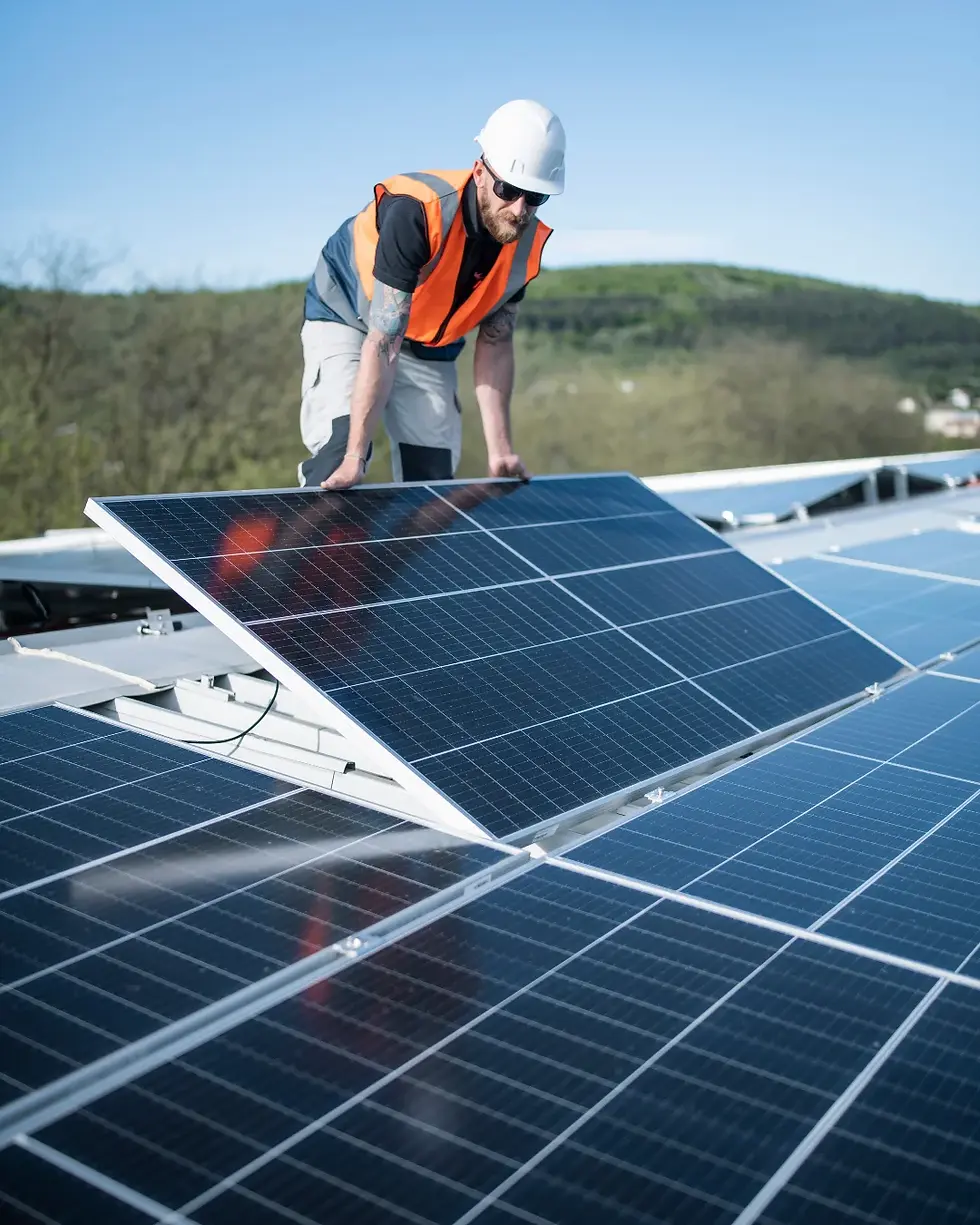
As a solar panel technician, you install photovoltaic modules, mounting systems, inverters, isolators, cabling, and monitoring equipment according to approved drawings and manufacturer instructions. Your work may involve roofs, car parks, warehouses, ground-mounted arrays, and plant rooms, each requiring different access and installation methods.
You measure roof areas, mark fixing points, assemble support structures, and route cables to minimise damage, voltage drop, and trip hazards. You terminate connections, label circuits, and check that components match the system design before energisation.
You also inspect existing equipment, identify faults, and replace defective modules, connectors, fuses, or inverters. Accurate records matter: you should document test results, equipment serial numbers, cable routes, defects, and remedial work for the client and maintenance team.
Technical Knowledge And Qualifications
A solar panel technician needs a sound understanding of direct current and alternating current systems, electrical protection, earthing, polarity, insulation resistance, and maximum system voltage. You should read single-line diagrams, layout drawings, datasheets, and electrical test schedules confidently.
Relevant training may include an electrical qualification, photovoltaic installation courses, and manufacturer-specific inverter training. In the UK, you should understand applicable BS 7671 requirements, Building Regulations, DNO connection requirements, and current industry guidance.
You must use calibrated test instruments correctly, including multimeters, clamp meters, insulation resistance testers, and, where required, photovoltaic test equipment. Strong fault-finding skills help you distinguish shading, poor connections, insulation failure, inverter faults, and monitoring problems.
Health And Safety Competence
You must assess risks before starting work and follow the site RAMS, permit systems, and emergency procedures. Commercial installations commonly involve work at height, fragile roofs, lifting operations, live electrical equipment, moving machinery, and restricted access.
Use suitable fall-protection systems, edge protection, scaffolds, ladders, and roof walkways as specified by the assessment. Wear task-appropriate PPE, including safety footwear, gloves, eye protection, head protection, and arc-rated clothing where the risk assessment requires it.
You should isolate, lock off, and verify circuits before handling conductors, while recognising that photovoltaic modules can produce voltage whenever exposed to light. Keep work areas controlled, secure loose materials, report defects promptly, and coordinate with site managers to protect workers and the public.

Installation, Maintenance And Career Development
You commission systems by verifying electrical performance, safety controls, and monitoring data before handover. You maintain output through structured inspections, accurate fault diagnosis, and planned component replacement. Continued training can lead to supervisory, design, or specialist roles for a solar panel technician at Solar Panels London.
System Commissioning And Testing
After installation, you check that modules, inverters, isolators, cabling, and protection devices match the approved design. You confirm correct polarity, secure terminations, cable identification, earthing, and enclosure ratings before energising the system.
You record open-circuit voltage, operating current, and insulation resistance for each relevant circuit. You compare results with design values and manufacturer limits, investigate abnormal readings, and test residual-current protection and emergency shutdown functions where fitted.
You configure the inverter, export limitation equipment, and monitoring platform according to the grid connection agreement. You then confirm that the system reports generation accurately, displays alarms correctly, and remains stable under changing irradiance.
Your commissioning pack should include test results, photographs, equipment serial numbers, settings, warranties, and operating instructions. You explain safe shutdown procedures to the client and report any outstanding defects before practical completion.
Fault Finding And Preventive Maintenance
You begin fault finding by reviewing inverter alarms, monitoring data, and recent performance changes. You isolate the relevant circuit safely, follow the manufacturer’s diagnostic sequence, and use calibrated meters.
Common faults include damaged cables, loose terminals, blown fuses, failed surge protection, inverter errors, shading changes, and communication failures. You inspect modules for cracks, delamination, hot spots, and soiling, while thermal imaging can help identify abnormal connections or cell temperatures.
Preventive maintenance typically includes visual inspections, torque checks, enclosure inspections, vegetation control, and cleaning where site conditions justify it. You should compare current output with historical data and investigate sustained underperformance.
You document every finding, repair, and test result. Clear records help you identify recurring faults, support warranty claims, and demonstrate that maintenance followed the site’s risk assessment and service requirements.
Solar Panels London is always seeking skilled solar panel technicians who are committed to safety, technical excellence, and ongoing professional development in the solar industry.

Learn more about the wider field in our blog “What Does a Solar Technician Do?”, and explore specialized repairs in “Solar Inverter Repair Technician.”
Progression Opportunities And Industry Demand
As a solar panel technician with Solar Panels London, you can progress from installation work into commissioning, service engineering or team leadership by gaining experience with larger systems and more complex controls. Relevant training may cover electrical regulations, inspection and testing, battery storage, high-voltage equipment and safe access systems.
Experienced solar panel technicians at Solar Panels London can move into roles such as senior engineer, commissioning manager, maintenance supervisor, technical trainer or site manager. Additional qualifications in design software, energy management or project coordination can support a move away from field-based work.
Commercial clients increasingly require dependable monitoring, documented maintenance and strong health and safety performance. Solar panel technicians at Solar Panels London improve their prospects by keeping certificates current, recording practical experience and learning how solar systems interact with batteries, electric vehicle charging and building management systems.


Comments