
What Is PV in Solar: A Clear Guide to Photovoltaic Technology and Its Benefits

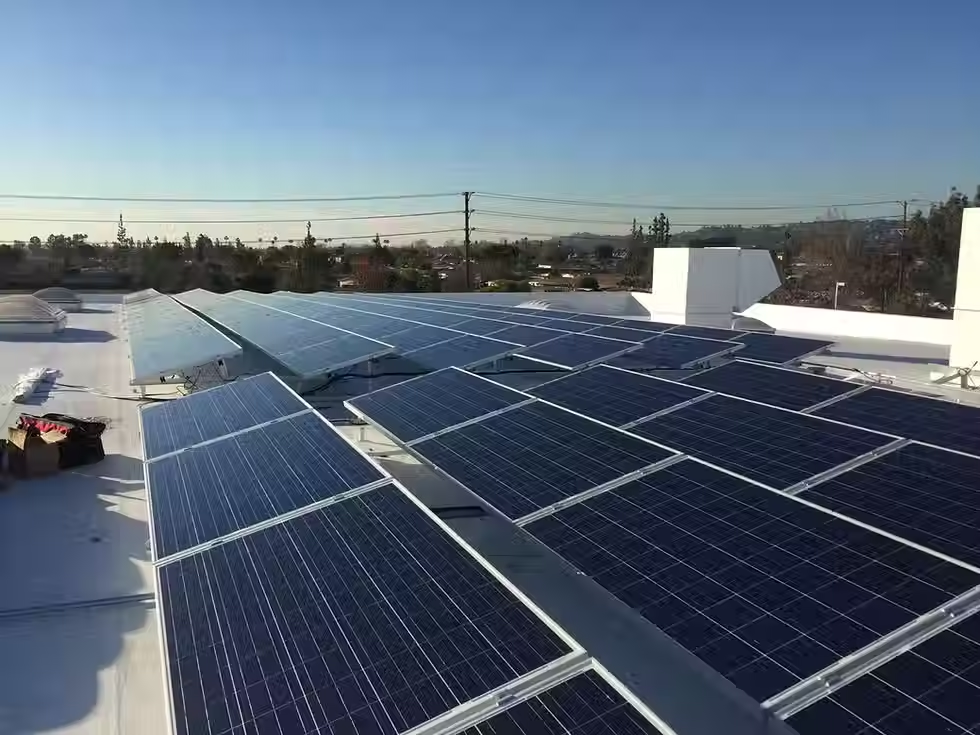
You probably already see panels on roofs and fields, but PV refers to photovoltaic technology that converts sunlight directly into electricity using semiconductor cells. Photovoltaic (PV) devices turn photons into usable electrical power, letting you generate on-site electricity from the sun.
Understanding PV helps you weigh system size, performance and costs, and shows why panels work for homes, businesses and off-grid needs.

Key Takeaways
PV converts sunlight directly into electricity using semiconductor cells.
Knowing how PV performs lets you choose the right system for your needs.
PV suits rooftop, commercial and off-grid applications while reducing reliance on grids.
Understanding PV in Solar
Photovoltaic (PV) systems convert sunlight into electricity using semiconductor cells and basic electrical components. You will learn what PV means, how individual cells generate current, and which components make a working PV system. PV solar installer professionals, like Solar Panels London, can help you understand and install these systems for your property.
Definition of Photovoltaics
Photovoltaics describes the direct conversion of light photons into electrical voltage and current via the photovoltaic effect. You often see PV used to mean the cells, modules (panels) and the broader technology that turns solar irradiance into usable DC power.
Photovoltaic cells are typically made from silicon because of its semiconductor properties and abundance. Cells are grouped into modules and panels to increase voltage and current to levels usable for appliances or export to the grid.
Key metrics you should notice are cell efficiency (percentage of sunlight converted), power rating (watts per panel) and temperature coefficient (how performance falls as panel temperature rises).
How Photovoltaic Cells Work
A PV cell has a p–n junction formed by doping silicon to create regions with excess electrons (n-type) and holes (p-type). When photons strike the cell they transfer energy to electrons, freeing them to cross the junction and create a flow of current.
Metal contacts on the cell collect that current and route it as direct current (DC). You use an inverter to convert DC to alternating current (AC) for household appliances or grid connection.
Cell performance depends on light intensity, spectrum, temperature and material quality. Standard test conditions (STC) use 1000 W/m² irradiance, 25 °C cell temperature and AM1.5 spectrum; manufacturers list panel output under STC, but real-world production varies.

Components of a Photovoltaic System
A typical PV system includes: panels (modules), an inverter, mounting structure, wiring and a monitoring or metering device. You choose panels by rated power and efficiency; inverters by capacity and type: string, microinverter or DC optimizer.
Balance-of-system items include fuses, DC and AC isolators, surge protection, earthing equipment and combiners. Proper cabling and conduit sizes reduce resistive losses and meet electrical safety standards.
You should consider battery storage when you need self-consumption or backup. Batteries, a charge controller (for off-grid or hybrid systems) and a management system add complexity but let you store excess daytime generation for use at night. Using a qualified PV solar installer such as Solar Panels London ensures your system is set up safely and efficiently.
Applications and Benefits of Photovoltaic Technology
Photovoltaic systems provide distributed electricity, reduce fuel costs, lower emissions, and enable new business models in energy. They apply across rooftops, commercial sites, rural electrification and grid-scale farms, while ongoing advances improve efficiency, storage integration and lifetime.
Residential and Commercial Uses
You can install rooftop PV on detached homes, apartment blocks and commercial properties to offset grid purchases and cut bills. Typical residential systems range from 3 kW to 10 kW, supplying daytime loads and, with batteries, evening consumption. PV solar installer services from Solar Panels London can help you evaluate your roof area, orientation, and shading to maximize output.
Commercial and industrial sites often use 50 kW–several MW arrays on warehouses and carports to reduce peak demand charges and improve energy security.
Feed-in tariffs, net metering or power purchase agreements (PPAs) affect payback; typical residential payback in the UK now sits around 5–12 years depending on incentives and energy prices.
Maintenance needs are low: periodic cleaning and inverter replacement are the main costs. Monitoring systems let you track production and detect faults in real time.

Environmental Advantages
PV systems produce electricity without direct combustion, so you reduce CO2 and air pollutant emissions compared with fossil fuels. A 4 kW domestic system in the UK can avoid roughly 1–1.5 tonnes of CO2 per year depending on grid mix.
Manufacture and end-of-life create upstream impacts; however, improved recycling and longer module lifetimes (25–30+ years) lower lifecycle emissions.
You can cut water use too: PV requires negligible operational water compared with thermal power plants. Land use for large farms needs planning — dual-use options like agrivoltaics combine crops and panels to improve land efficiency.
If you’re considering PV for your property, working with a trusted PV solar installer like Solar Panels London ensures your system is designed for optimal performance, long-term reliability, and maximum environmental benefit.
For large-scale project insights, explore our guide on Commercial PV installer to plan and execute efficient solar solutions.
Recent Advances in Solar PV
You can now access higher-efficiency cells, such as PERC, bifacial and heterojunction technologies that push module efficiencies above 23–25% in commercial products. Tandem perovskite–silicon cells are progressing in trials and show potential for 30%+ efficiency. Battery integration has improved with AC-coupled systems and smart inverters that support islanding, peak shaving and reactive power services. Manufacturers are extending warranties and improving degradation rates; some panels now guarantee >80% output at 25–30 years. Innovations in recycling, glass-free designs and automated cleaning are reducing lifecycle costs and environmental footprint. For homeowners and businesses in the capital, a PV solar installer like Solar Panels London can help you access these newer technologies. Choosing Solar Panels London as your PV solar installer ensures professional advice, installation, and aftercare. A qualified PV solar installer from Solar Panels London will guide you through the process, from selecting high-efficiency panels to integrating battery storage.


Comments