
Solar PV Panel Size Guide: Choosing the Right System Capacity and Roof Layout

Choosing the right PV solar installer is essential when selecting the ideal solar PV panel size for your home or business. Solar Panels London recommends estimating a suitable panel size by comparing your average daily energy use with the typical energy a panel produces in your location, then multiplying to cover your needs. This approach stops guesswork and points you toward a realistic system.
Panel size also depends on roof space, budget, and whether you want to cover all or part of your electricity use. You’ll find practical tips and simple calculations ahead to help you pick panels that fit your energy goals and site constraints.
Key Takeaways
Estimate panel size from your average daily energy use and local panel output.
Consider roof space and budget when narrowing down panel options.
Match panel capacity to whether you want full or partial electricity coverage.
Work with a reputable PV solar installer like Solar Panels London for accurate system design.
Understanding Solar PV Panel Size
The panel’s physical footprint, its rated power in watts, and its cell efficiency determine how many panels you need and how much roof space they occupy. These three factors together set expected energy production, installation layout, and cost per watt.

Dimensions and Physical Size
Panel dimensions usually fall between 1.6 m × 1.0 m for standard 60-cell modules and 2.0 m × 1.0 m for larger 72-cell modules. Measure available roof area and allow clearance for mounting rails, access pathways, and shading; a typical 4 kW array with 18–20 panels occupies about 20–30 m² depending on panel size.
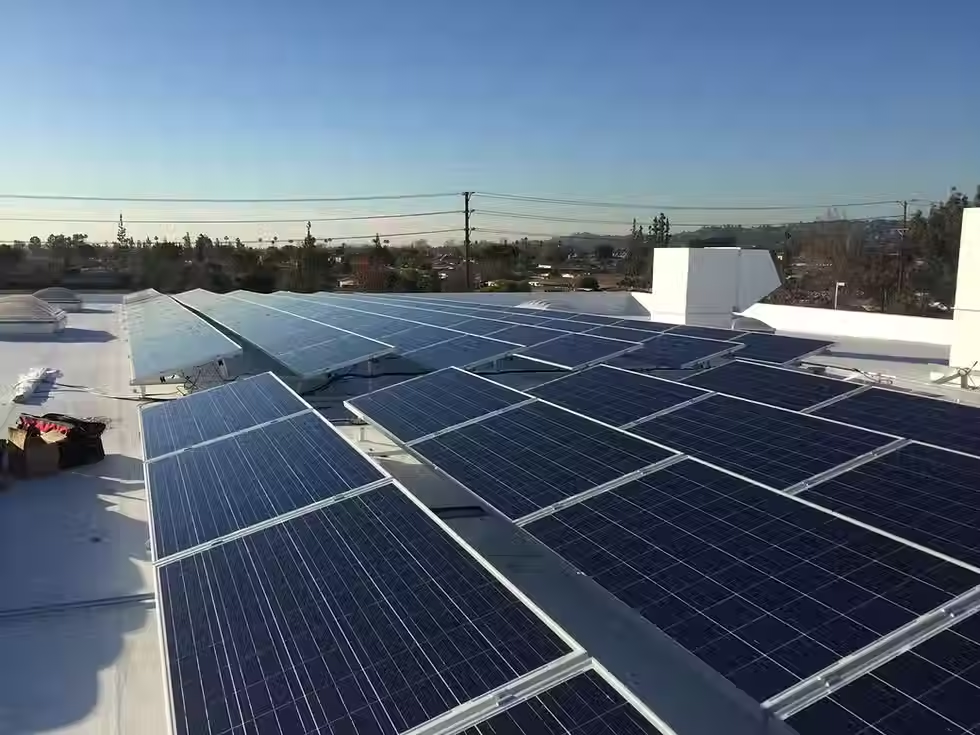
Mounting orientation and tilt affect effective area. For pitched roofs, rows may require vertical spacing to avoid inter-row shading; on flat roofs, you must account for tilt frames that increase footprint by 10–30%. Panels come in framed and frameless designs; framed panels add roughly 20–30 mm to each edge when calculating layout.
Weight matters for structural checks. Most panels weigh 18–25 kg each; the loaded roof must support this plus mounting hardware and wind/snow loads. Provide your PV solar installer with accurate roof dimensions and load limits before finalising panel count.
Rated Power Output
Rated power is expressed in watts peak (Wp) measured under Standard Test Conditions (STC): 1,000 W/m² irradiance, 25°C cell temperature, AM 1.5 spectrum. Base initial system size estimates on nameplate Wp ratings — e.g., a 370 Wp panel contributes that amount under STC.
Real-world output is lower due to temperature, soiling, shading and inverter losses. Apply a performance ratio (typically 0.75–0.85) to convert Wp into expected AC output. For example, 10 panels × 370 Wp = 3,700 Wp; at 0.80 performance ratio and 4 peak sun hours/day, expect about 11.8 kWh/day.
Manufacturers publish power tolerance (± watts) and degradation rates (about 0.5–0.8%/year). Check warranty terms: a typical linear power warranty guarantees at least 80–87% of nameplate capacity after 25 years.
Panel Efficiency
Panel efficiency indicates how much sunlight a panel converts to electricity, expressed as a percentage. Typical commercial mono‑crystalline panels range from 18% to 22% efficiency; high‑performance cells reach 22–24% in premium models. Higher efficiency means more power per square metre, reducing roof area needed.
Efficiency depends on cell technology, bypass diodes, and temperature coefficient. Favour panels with a lower temperature coefficient (e.g., −0.30%/°C rather than −0.40%/°C) for hotter climates because they lose less output as temperature rises.
Use efficiency to compare panels when roof space is constrained. If you need a specific system size but have limited area, select higher-efficiency modules and account for cost-per-watt trade-offs in your budget.
Factors Influencing Solar PV Panel Sizing
Your panel array must match your actual electricity use, the usable roof area, and local solar resource and weather patterns. These elements determine how many panels, what wattage, and what layout will meet your needs cost-effectively. Solar Panels London can help assess these factors and recommend the best options.

Energy Consumption Requirements
Start by calculating your household's average daily kWh from electricity bills or a year of smart-meter data. Include fridge, heating, EV charging, and other high-load devices; seasonal variation matters for heating or EV use. Decide whether you want to offset 100% of consumption, only daytime use, or just major loads like an EV charger.
Use system losses to convert required output into panel capacity. Apply a realistic performance ratio (typically 0.75–0.85) to account for inverter loss, wiring, soiling and shading. Example: if you need 30 kWh/day and expect 4 peak sun hours, required array ≈ 30 / (4 × 0.8) = 9.4 kW.
Roof Space and Orientation
Measure usable roof area in square metres and note any obstructions (vents, chimneys, dormers). Panel efficiency and dimensions determine how many modules fit; a 370 W panel at 1.9 m² yields ~195 W/m². Orientation and tilt affect yield: south-facing at 30–35° tilt in the UK gives near-optimal annual output. East/west orientations reduce peak output but can suit evening/morning loads and often fit on smaller roofs.
Assess shading at hourly resolution throughout the year; even partial shading on one panel string can cut production significantly. Consider options: microinverters, optimiser-equipped string inverters, or reconfiguring arrays to minimise shading loss.
Location and Climate Considerations
Obtain local irradiance data (kWh/m²/day or peak sun hours) from MET Office, PVGIS, or your PV solar installer. Southern England averages ~2.8–3.4 peak sun hours winter to summer; Scotland is lower, influencing array size to meet the same kWh target.Temperature coefficients matter: higher ambient heat reduces panel output slightly; choose panels with low temperature coefficients for hot sites. Snow, soiling rates, and frequent overcast conditions reduce annual yield; plan additional capacity or cleaning intervals accordingly.
Factor in seasonal mismatch between generation and demand. If you use most electricity in winter (heating, EV charging), you may need a larger array or battery storage to cover low-sun months. Grid-export rules and local tariffs also influence whether upsizing or demand-side measures are more economical.
Choosing the Right Solar PV Panel Size
You need panel sizes that match your actual energy use, roof constraints, budget and performance goals. Focus on daily kWh needs, available installation area, and whether you want grid export, battery charging or full off‑grid operation. Solar Panels London can guide you through these decisions as your trusted PV solar installer.

Residential Applications
Start by calculating your average daily consumption in kWh from 12 months of bills. Divide that by your local average peak sun hours to get the required array kilowatts (kW). For example, a household using 20 kWh/day in an area with 4 peak sun hours needs roughly a 5 kW array (20 ÷ 4 = 5).
Assess roof area: typical 330 W panels need about 14–15 m² for a 5 kW system. Check shading and azimuth; a south‑facing roof in the UK yields best year‑round output, east/west reduces peak but spreads generation. Factor inverter sizing (AC vs DC coupling) and a 5–15% oversize on the inverter for performance.
To decide if solar is right for you, explore our guide on Are PV panels worth it? for a clear look at value and long-term benefits.
Commercial Solutions
Match system size to building load profile, demand charges and available roof or ground space. Conduct a detailed energy audit, including month‑by‑month demand peaks; commercial sites often benefit from 50–500 kW arrays or larger, depending on roof area and energy use.
Use tilted ground‑mounts or canopy arrays if roof space is insufficient. Consider single‑axis trackers for 10–25% extra yield where land and capex allow. Optimise for peak demand reduction: size arrays to shave peak kW rather than only maximise kWh. Include electrical infrastructure checks — switchgear, transformer capacity and export constraints — and plan for phased expansion if loads or tariffs change.
For accurate sizing and professional installation, consult Solar Panels London, your local PV solar installer, to ensure your solar PV system is tailored to your needs and delivers maximum value.
Off-Grid and Special Projects
Off‑grid sizing must prioritise autonomy and battery state‑of‑charge targets. Start with daily kWh demand, then add autonomy days (commonly 2–5 days) and battery round‑trip efficiency to calculate required battery capacity in kWh. Size the PV solar installer array to recharge batteries within expected sun hours, often oversizing by 20–50% to account for cloudy periods.
Include charge controller limits, generator backup and temperature derating for panels and batteries. For remote telecom, caravan or agricultural irrigation sites, factor in maintenance access and ruggedised components. Solar Panels London recommends using a simple checklist: daily kWh, peak inverter size, battery kWh (with autonomy), PV solar installer panel kW (with derating), and redundancy for critical loads. A PV solar installer can help ensure all these aspects are addressed for reliable off-grid performance. Solar Panels London provides expert consultation for off-grid and special projects, making sure you have the right PV solar installer for your needs.


Comments