
Solar Panels ROI: Calculating Payback Time and Long-Term Savings
- Solar Panels London

- May 27
- 6 min read
You want to know whether warehouse solar panels pay off and how quickly you’ll recover the cost. Most homeowners recoup their investment within 6–12 years, depending on your electricity price, local incentives, and system size.
You’ll learn which factors drive that payback — from upfront costs and rooftop suitability to tariffs and maintenance — so you can estimate your own return rather than rely on averages. The article walks through a simple payback calculation and highlights long‑term value, including increased home resale value and protection against rising energy prices.
Key Takeaways
Estimate payback using your current electricity bills, system cost, and local incentives.
Local policies and installation quality strongly affect short‑term financial returns.
Consider long‑term savings and resale value when assessing overall investment.

Factors Influencing Financial Returns
Key drivers include how much you pay upfront, the system’s real-world output over time, and the solar resource where your property sits. These determine payback period, annual savings and long‑term net benefit.
Initial Investment and Incentives
Your upfront cost mainly comprises panels, inverter, mounting, wiring and installation labour. Typical UK installations (3–4 kW) cost £4,000–£8,000 before incentives; larger systems scale cost per kW down. Government schemes and local grants directly reduce payback time. For example, a 25% government grant or a £1,000 local rebate cuts the capital you must recoup and speeds ROI.Tax arrangements and finance terms matter. Interest on loans increases total cost; low‑interest green loans or interest‑free periods improve returns. VAT rules (reduced or zero‑rate for some installations) also affect net cost.You should factor expected maintenance and inverter replacement (often at 10–15 years) into lifetime cost projections.
System Efficiency and Performance
Warehouse solar panel efficiency determines how much roof area you need for a target output. Higher‑efficiency panels (20%+) produce more kWh per m², useful on small roofs, but cost more per watt. Real performance depends on orientation, tilt and shading.
South‑facing roofs at 30–35° tilt deliver close to peak yields in the UK; even small shading from chimneys or trees can reduce output significantly. Degradation rate and inverter efficiency reduce lifetime energy. Typical mono‑crystalline modules degrade ~0.5%–0.8% per year; an inverter with 98% efficiency minimizes losses. Performance monitoring and optimisation (microinverters, optimisers) recover production in partially shaded arrays and improve annual yield, increasing effective ROI despite higher initial equipment cost.
Local Climate and Sunlight Hours
Solar irradiance in your location sets the maximum annual kWh per kW installed. Southern England averages ~900–1,100 kWh/kW‑yr; northern Scotland often yields 700–900 kWh/kW‑yr. Seasonal variation is large: winter months produce far less, so storage or grid export policies affect how much generation you actually use or sell. Net metering or export tariffs determine the value of excess generation. Weather patterns impact performance: persistent cloud cover and frequent rain reduce annual output, while long sunny spells increase it. Microclimate factors—local fog, tree shelter or coastal salt spray—also alter yield and maintenance needs. You should use local PVGIS or MCS yield estimates to model expected annual generation and compare realistic payback periods for your exact postcode.
Calculating Payback Period
This section explains how to convert your system cost and ongoing figures into a clear payback timeframe. It covers estimating annual savings from generation, adding operating costs, and adjusting for future tariff changes so you can calculate a realistic years-to-payback number.
Estimating Annual Energy Savings
Start by calculating your system's expected annual generation: multiply panel capacity (kW) by the site-specific performance ratio (typically 0.75–0.85) and by annual peak-sun-hours or solar irradiance for your location. For example, a 4 kW system with a 0.80 performance ratio and 1,000 peak hours yields 4 × 0.80 × 1,000 = 3,200 kWh per year.
Convert generation into monetary savings using the unit electricity price you pay. If you pay 35p/kWh, then 3,200 kWh × £0.35 = £1,120 saved per year. Include any export payments separately (e.g. 5p/kWh exported) and subtract self-consumption losses if you do not use all production on-site.
Account for panel degradation (typically 0.5–1% per year). Apply a simple decline factor when projecting multi-year savings: Year n generation = Year 1 generation × (1 − degradation)^(n−1). Use conservative estimates for irradiance and self-consumption to avoid overstating savings.

Accounting for Maintenance and Running Costs
List fixed and variable costs you will incur: inverter replacement (commonly at year 10–15), periodic cleaning, insurance, monitoring subscriptions, and minor repairs. Expect an inverter replacement cost of roughly £800–£2,000 for typical domestic systems, and annual cleaning/maintenance of £20–£100 depending on access and roof pitch.
Calculate net annual benefit by subtracting recurring costs from annual energy savings. Example: £1,120 savings − £60 annual maintenance − £40 insurance = £1,020 net per year. For multi-year modelling, include a capital expenditure entry for inverter replacement at the expected year and spread or discount that cost if you prefer net present value (NPV) accuracy.
For your warehouse solar panels factor in warranties and performance guarantees: a 25-year panel warranty reduces risk of major output loss but does not eliminate routine costs. Keep a simple table to track scheduled costs and one-off replacements across years for clarity.
Adjusting for Energy Tariffs Over Time
Project your grid electricity price escalation, using an annual increase rate based on recent trends or regulatory forecasts. Common modelling uses 2–4% per year for conservative estimates, or 5–7% for higher-inflation scenarios. Apply the escalation to the unit price to increase the value of each kWh you offset in future years.
When tariffs vary between import and export, model them separately. For example, if import is 35p/kWh rising 3% annual and export is 5p/kWh rising 1% annual, calculate yearly savings using the evolving rates and your projected self-consumption share. This matters because higher import inflation increases the value of self-consumption.
If you use discounting, select a discount rate that reflects your cost of capital or personal preference (commonly 3–6%). Discount future savings and costs back to present value to calculate an NPV payback alternative. For simple payback, sum annual net savings until they equal your initial outlay, but remember escalating tariffs shorten payback while higher discount rates lengthen NPV-equivalent payback.
Long-Term Value Considerations
Installing solar affects resale appeal, ongoing savings, and end-of-life options. You should weigh how panels integrate with home value, the durability of savings over decades, and responsible disposal or recycling routes.
Impact on Property Value
Warehouse solar panels often increase curb appeal for buyers focused on lower energy bills and sustainability. Studies in the UK and comparable markets show typical uplift between 3% and 6% of property value when systems are owned outright; leased arrays or complex warranties can reduce buyer interest.
Location matters: areas with high electricity prices and supportive local policies see stronger premiums. Panel age, remaining warranty (usually 10–25 years), and visible roof condition influence buyer perception. Make documentation available — installation certificates, MCS accreditation, inverter records and performance data — to improve valuation. If you plan to sell within a few years, factor in transferability of any feed-in tariff, Smart Export Guarantee credits, or bespoke maintenance agreements.
Potential for Increased Savings
Your long-term savings depend on system size, orientation, local irradiance, and electricity price inflation. Typical UK domestic systems (3–4 kWp) generate roughly 2,500–3,400 kWh/year; match this against your annual consumption to estimate self-consumption rates and payback time. Higher self-consumption (via load-shifting, battery storage, or smart controls) shortens payback and increases ROI.
Account for degradation: most panels lose about 0.5%–0.8% output per year. Inverter replacements around year 10–15 are common and cost between £800–£2,000. Model scenarios using current tariffs and projected 3–5% annual energy price increases to compare outcomes. Include maintenance costs (cleaning, occasional repairs) in cashflow calculations to get realistic net savings.
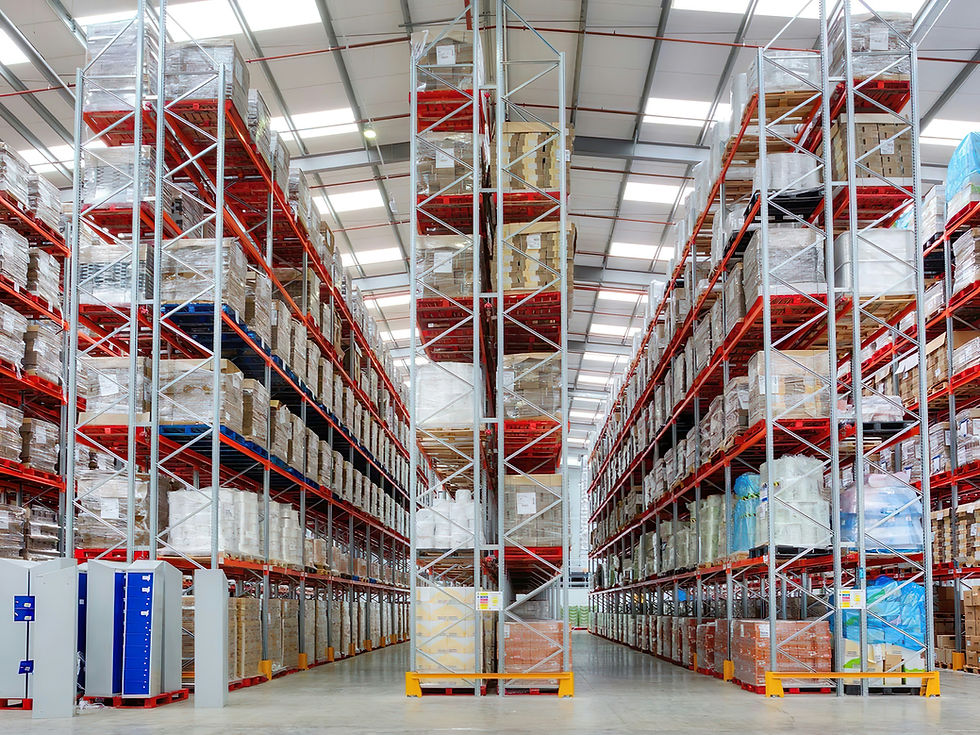
Warehouse Solar Panels: A Key Opportunity
For commercial properties and warehouses, warehouse solar panels present an outstanding opportunity to reduce operational costs and carbon footprint. Solar Panels London specializes in designing and installing warehouse solar panels that maximize available roof space for optimal energy generation. The larger roof areas found on warehouses allow for expansive solar arrays, which translates to higher annual savings and faster ROI compared to smaller domestic systems.
Warehouse solar panels installed by Solar Panels London benefit from economies of scale, reducing the cost per kW and increasing the financial return for business owners. With rising energy prices and the increasing importance of sustainability, warehouse solar panels are a future-proof investment for any logistics or industrial operation.
Solar Panels London offers comprehensive support, from site assessment and planning to installation and maintenance of warehouse solar panels. The expertise of Solar Panels London ensures that your warehouse solar panels operate efficiently, delivering consistent savings and supporting your business’s green credentials.
Whether you are considering solar for your home or evaluating warehouse solar panels for your business, Solar Panels London provides tailored solutions that maximize financial and environmental benefits.
For more insights into large-scale energy solutions, explore our guides on Industrial Solar Panels and Commercial Solar Panel Installation.
End-of-Life Options and Recycling
When warehouse solar panels reach end-of-life (typically 25–35 years), you must plan disposal or recycling to avoid liability and reduce environmental impact. In the UK, producers and authorised take-back schemes increasingly manage PV recycling; firms recover aluminium framing, glass and silicon. Efficient recovery of silver and copper is improving.
Check warranty and installer contract for return or replacement clauses. Contact MCS-approved recycling partners or your local council for authorised waste streams and hazardous component handling (batteries and certain inverters). If you aim to refurbish or resell warehouse solar panels, verify remaining efficiency and provide test data; second-life markets exist for low-demand applications and can extend useful life before final recycling. Solar Panels London can assist with guidance on recycling and end-of-life management for warehouse solar panels.


Comments