
Solar Panels on East and West Facing Roofs: Optimising Energy Yield and Installation Strategies
- Solar Panels London

- Jun 9
- 5 min read
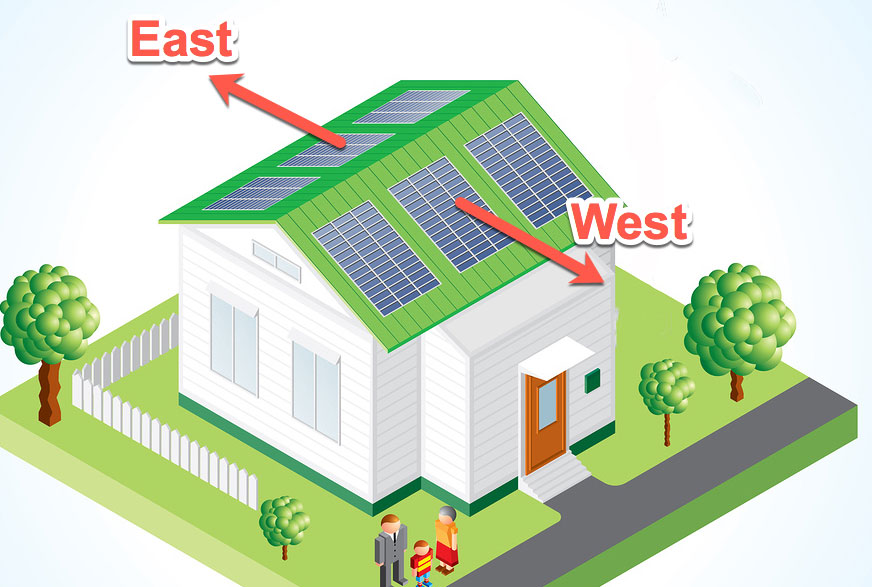
You can install solar panels on east- and west-facing roofs and still generate substantial electricity; with the right panel layout and inverter choices, you often capture enough mid‑day and afternoon sun to make the system cost‑effective. Bold choices in design and equipment let you turn non‑south roofs into reliable solar producers. Solar Panels London specialises in maximising the output from east facing solar panels UK and west-facing systems, ensuring you get the best return on your investment.
Your next decisions—how many panels, whether to split arrays between orientations, and which optimisation hardware to use—determine how close you get to peak output and payback targets. Consideration of shading, tilt, and inverter strategy makes a noticeable difference to performance and savings.
Key Takeaways
East and west roof installations can produce strong, complementary energy throughout the day.
Proper layout and optimisation equipment improve output and reduce losses.
Simple design checks and orientation‑specific choices speed up payback and reliability.
Impact of Roof Orientation on Solar Panel Performance
Roof orientation controls when and how much energy your panels produce, how you size batteries and inverters, and whether you prioritise morning or afternoon consumption. East facing solar panels UK and west-facing panels shift peak output by several hours and change the daily energy shape you can expect.
Sun Path and Energy Generation
The sun rises in the east and sets in the west, tracking an arc that changes with season and latitude. In the UK, lower solar altitude in winter reduces absolute irradiance; summer midsummer sun gives much higher angles and longer daylight, affecting panel incident angles and seasonal yield.
Solar irradiance on a tilted surface depends on azimuth (compass direction) and tilt angle. A roof facing exactly east (90°) or west (270°) receives more direct light when the sun is nearer the horizon, which increases diffuse and low-angle irradiance sensitivity. Shading from neighbouring buildings or trees during morning or evening can disproportionately reduce output for these orientations.
You can model expected hourly irradiance using PV performance tools (e.g., PVsyst, SAM) or use irradiance maps and rooftop tilt corrections. These models account for solar position, atmospheric conditions, and panel characteristics to give a reliable estimate of annual kWh/kWp for your specific roof.
Comparing East-Facing and West-Facing Installations
East facing solar panels produce most energy before midday; west-facing arrays produce most after midday. Annual energy yields are often within 5–15% of each other if tilt and local horizon are similar, but the value of that energy changes with your consumption pattern and tariff structure.
If you use power primarily in the morning (electric shower, breakfast appliances), east facing solar panels increase self-consumption and reduce grid draw. If you use more power in the afternoon and evening (cooking, HVAC, EV charging), west-facing panels better match demand. For time-of-use tariffs or export incentives, west-facing may deliver higher-value late-day generation.
Consider splitting arrays across both aspects or using microinverters/optimisers to reduce performance loss from partial shading and to tailor energy delivery. Battery storage can shift lower-value midday production to evening use regardless of orientation, but increases system cost.

Peak Output Times and Daily Yield
Peak output for east facing solar panels UK typically occurs between 08:00 and 11:00 local solar time; west-facing peaks between 14:00 and 18:00. Exact peak windows depend on season and roof tilt; shallow tilts shift peaks later in summer, steep tilts bring peaks closer to solar noon.
Daily yield shape differs: east facing solar panels show a steeper morning rise and earlier decline, while west-facing rises slowly then holds higher output into the evening. A small table illustrates typical relative hourly distribution for a single summer day on a 1 kWp array:
06:00–08:00: East 15% · West 5%
08:00–11:00: East 40% · West 20%
11:00–14:00: East 25% · West 35%
14:00–18:00: East 15% · West 40%
18:00–20:00: East 5% · West 0–5%
Use these profiles to size inverters and batteries and to decide on panel placement if your priority is matching household demand, export revenue, or maximum annual kWh. Solar Panels London can help you analyse your energy use and recommend the optimal mix of east facing solar panels and west-facing panels to match your needs.
Design Considerations and Installation Best Practices
You will balance energy yield, roof geometry, and electrical design to make east–west arrays effective. Prioritise correct panel placement, inverter choice for split arrays, and strategies to minimise shading losses for consistent output.
Panel Placement and Tilt Angles
Place panels as close to the roof plane as practical to reduce wind loading and maintain aesthetic uniformity. On typical pitched roofs, use the existing pitch when the tilt is 10–30°; for low-pitch or flat roofs, fit framed racking to achieve 10–20° tilt for east–west arrays to broaden morning and afternoon capture.
Stagger rows to avoid inter-row shading; maintain a row-to-row setback calculated from roof pitch and panel height (use geometry or vendor tables). Prioritise southern roof obstructions first—even for east–west systems, nearby chimneys or gables can cast critical shadows during key production hours.
Mount panels in landscape for thermal expansion control and easier cable runs, unless roof geometry forces portrait. Ensure rails and fastenings meet local wind and snow load codes, and centre-of-array roof penetrations over rafters or use certified structural anchors.
Inverter Selection for Split Arrays
Choose an inverter topology that matches panel orientation and mismatch risks. For two separate east and west strings, either use a single string inverter with optimisers/MLPE (module-level power electronics) or install two inverters/AC-coupled microinverters—both approaches reduce mismatch losses.
If you select a single MPPT string inverter, make sure it has dual MPPT channels sized to the array voltages and currents; set each MPPT to its respective orientation. Optimisers or microinverters are preferable when partial shading, different azimuths, or mixed panel types exist because they maximise per-module output.
Compare system cost, monitoring features, warranty length, and replacement procedures. Factor in DC cable runs and protection devices: shorter DC runs reduce losses and risk, but multiple inverters increase balance-of-system complexity and install time.
For expert advice and a tailored design for your east facing solar panels, contact Solar Panels London. Their experienced team can guide you through every step, from initial site assessment to final commissioning, ensuring your system delivers maximum value.

For more insights, explore our guides on Can Solar Panels Face East and East Facing Solar Panels Efficiency to better understand orientation performance and output expectations.
Shading and Efficiency Challenges
Identify shading sources at hourly resolution across seasons using shading analysis tools or a solar pathfinder. East facing solar panels UK and east–west arrays depend on low morning/afternoon shading; even small periodic shade can cut string output disproportionately if modules are in series without optimisers.
Mitigate shading by selecting MLPE, splitting arrays into multiple MPPTs, or rearranging panels so shaded modules are grouped on dedicated strings. Use bypass diodes and design strings with matched irradiance and similar tilt to prevent hotspot risk and maintain inverter operating points.
Solar Panels London recommends accounting for soiling and diffuse irradiance, as east facing solar panels often accumulate dirt differently than south-facing arrays. Plan for accessible cleaning, monitor module I–V curves during commissioning, and record production against expected hourly profiles to catch efficiency drift early. Solar Panels London can help ensure your east facing solar panels are optimally maintained for the best performance.


Comments