
Solar Battery Storage Home: Practical Guide to Installation, Costs and Savings
- Solar Panels London

- Apr 29
- 5 min read
You can cut your electricity bills and keep power flowing during outages by pairing solar panels with a home battery. A well-sized solar battery stores excess daytime generation for use at night or when the grid fails, giving you greater control over energy costs and reliability.
This guide shows how solar energy storage works, which benefits matter most for households, and what to consider when choosing and installing a system. You’ll get practical steps to compare capacity, lifespan and installation trade-offs so you can decide whether a battery makes sense for your home. Solar Panels London can help you navigate the options and install the right solar energy storage solution for your needs.

Key Takeaways
Solar energy storage reduces grid dependence and lowers evening energy costs.
Batteries increase resilience by providing backup power during outages.
Choose capacity and installation that match your household demand and budget.\
Key Benefits of Residential Solar Battery Systems
A home battery stores the solar energy you generate, shifts when you use grid power, and keeps critical circuits running during outages. The following points detail how solar energy storage affects consumption, resilience, cost and emissions.
Maximising Solar Self-Consumption
A battery lets you use the electricity your panels produce rather than exporting it to the grid at low rates. You can programme the system to charge during high solar production and discharge in the evening when your appliances draw the most power.
Consider these operational strategies:
Time-based charging: charge while panels produce peak power and avoid exporting.
Load prioritisation: direct stored energy to high-use circuits such as heating, refrigeration and EV chargers.
Intelligent inverters/EMS: an energy management system can forecast production and household demand to reduce grid imports.
Quantifiable benefits depend on your roof output, household profile and local export tariffs. In many UK homes, batteries can increase self-consumption from ~30% to 60–80%, reducing reliance on wholesale or standard retail electricity.
Energy Resilience During Power Outages
A battery provides backup power for essential loads when the grid fails, keeping your lights, fridge and medical devices operational. You can select whole-house or critical-load backup depending on battery capacity and inverter capability.
Key considerations:
Usable capacity (kWh): determines how long critical devices run — eg, a 10 kWh battery might run essential circuits for 8–24 hours depending on load.
Automatic islanding: certified systems disconnect safely from the grid and supply your home within seconds of a fault.
Scalability: you can add batteries later to extend backup duration without rewiring.
Plan backup configurations by listing essential circuits and calculating typical hourly consumption to choose a battery size that meets your outage tolerance.
Reducing Electricity Bills
Batteries store low-cost or self-generated energy and discharge it when grid prices are high, lowering your import from the grid. That can cut your standing and unit charges over time, especially if you combine storage with time-of-use tariffs.
Financial factors to review:
Price arbitrage: buy cheap overnight power to discharge during peak rates, if your tariff supports it.
Export tariff avoidance: reduce sold-back energy at low export rates by consuming it at home.
Payback period: depends on system cost, household consumption, tariff structure, and available incentives; typical payback ranges from 6–15 years in current UK conditions.
Use a simple calculation: annual savings = (kWh shifted × avoided import price) + (kWh of reduced export × export price). Compare that to annualised system cost to estimate payback.

Environmental Impact of Home Energy Storage
A battery increases the proportion of renewable electricity you use, cutting your household’s indirect emissions from grid-supplied power. It also enables greater integration of rooftop solar, reducing reliance on fossil-fuelled generation during peak demand.
Environmental factors to weigh:
Lifecycle emissions: manufacturing and recycling produce emissions; choose chemistries and suppliers with transparent lifecycle data.
Durability and warranties: longer-lasting batteries reduce lifetime environmental impact per kWh stored.
Grid decarbonisation synergy: as the UK grid gets greener, stored solar displaces progressively cleaner marginal generation, further lowering your footprint.
Check manufacturer recycling programmes and end-of-life policies to minimise environmental costs when the battery reaches the end of its service life.
Choosing and Installing a Solar Battery at Home
You will choose between lithium, lead-acid, and flow batteries, decide capacity based on daily usage and backup needs, and plan for professional installation that meets safety, warranty and grid-connection requirements. Solar Panels London specialises in solar energy storage solutions and can guide you through the selection and installation process.
Types of Solar Batteries for Residential Use
Lithium‑ion (Li‑ion) batteries dominate the market for homes. They offer high usable depth of discharge (DoD often 80–95%), long cycle life (4,000–10,000 cycles depending on chemistry), compact size, and higher round‑trip efficiency (typically 90–95%). Expect higher upfront cost but lower levelised cost over typical 10–15 year system lifetimes.
Sealed lead‑acid (SLA) and deep‑cycle AGM/Gel batteries cost less initially but have lower DoD (40–60%), shorter cycle life (300–1,500 cycles) and larger footprint. They still suit very tight budgets or infrequent use.
Redox flow systems scale well for large capacity and offer long calendar life, but they remain expensive and complex for most houses. Match battery chemistry to your budget, space, expected cycles per day, and desired warranty terms.
Determining Storage Capacity and Sizing Needs
Start by calculating your average daily electricity use from recent bills (kWh/day) and identify loads you want backed up (fridge, lights, heating controls). Multiply desired backup hours by those load kW values to estimate required usable kWh.
Factor in DoD and inverter/round‑trip losses: required battery capacity = usable kWh ÷ (DoD × efficiency). Example: you need 6 kWh usable, using a battery with 90% DoD and 92% efficiency → nominal capacity ≈ 6 ÷ (0.9×0.92) ≈ 7.2 kWh.
Consider charge sources: match battery size to PV array output so the system can recharge on typical sunny days. Also review degradation rates and manufacturer warranty (e.g. capacity retention ≥70% after 10 years) when sizing for long‑term needs. Solar Panels London offers expert advice to ensure your solar energy storage system matches your household’s requirements and delivers long-term value.
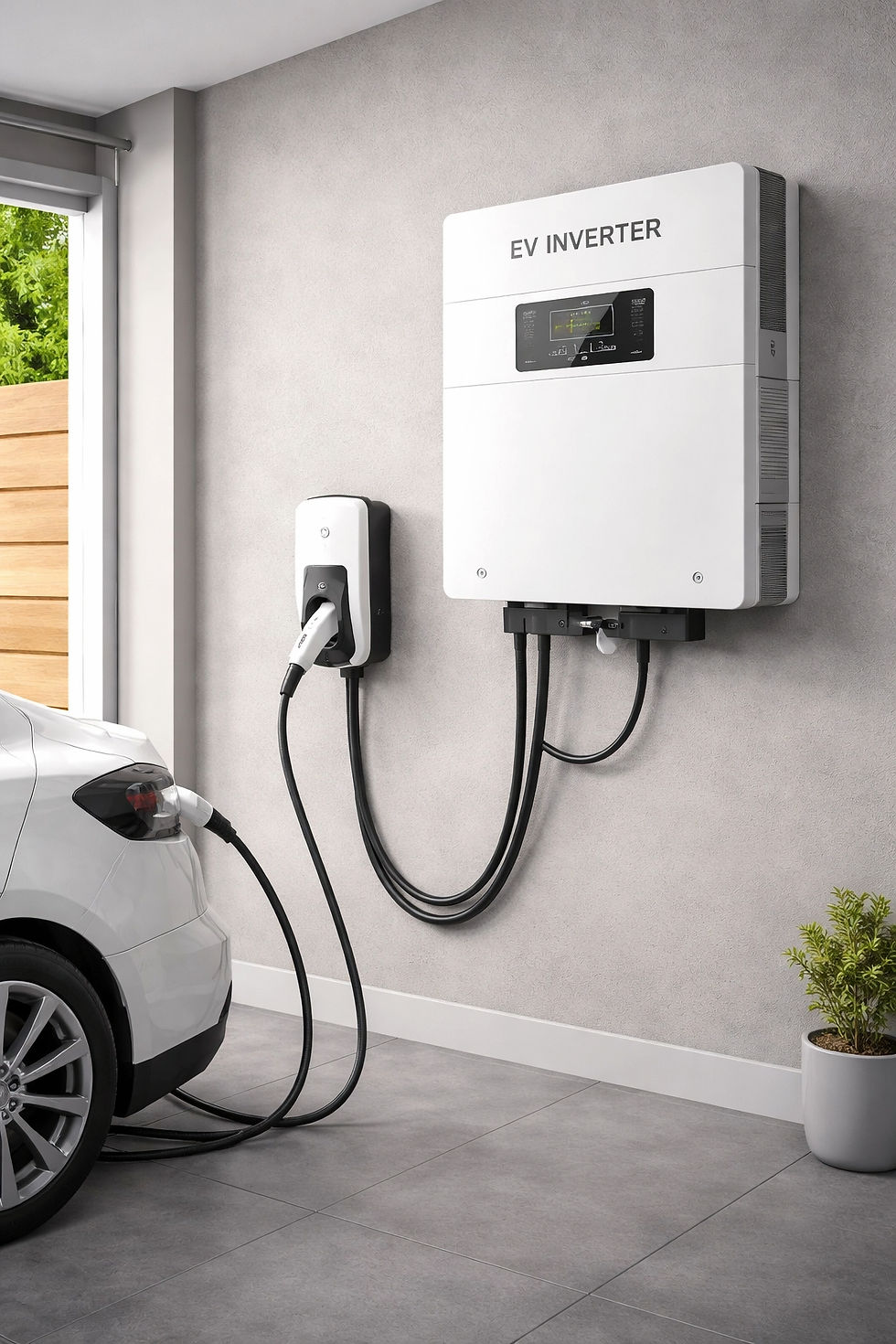
For deeper guidance, check out our blogs on “Best Battery for Storing Solar Power” and “Solar Battery Storage System.”
Professional Installation Considerations
Always use a certified installer experienced with battery systems and local grid rules. Solar Panels London recommends that installers assess structural location (garage, utility room, external rated enclosure), ventilation needs, cable runs, isolation switches, and compliance with Building Regulations and Distribution Network Operator (DNO) requirements to ensure safe and efficient solar energy storage.
Ask about connection type (AC‑coupled vs DC‑coupled), compatible inverter/charger brands, monitoring platform, and export limits. Solar Panels London suggests obtaining a written quote that details component brands, warranty terms, commissioning tests, and evidence of electrical safety certification (e.g. Part P, NICEIC or local equivalent) for your solar energy storage system.
Plan for permits and notifications: installers typically notify your DNO and register batteries under any required safety schemes. Solar Panels London advises keeping documentation for warranty and insurance; improper installation can void warranties and create fire or electrical risks in your solar energy storage setup.


Comments