
Optimal Tilt for East Facing Solar Panels: Expert Guidance on Angle, Performance and Seasonal Adjustments
- Solar Panels London

- Jun 12
- 5 min read
If your panels face east, tilting them lower than your latitude often improves morning generation and reduces midday losses. Aim for an angle roughly equal to your latitude minus 10–15° to boost morning output without sacrificing too much daily energy.
You can fine-tune with a small seasonal tilt or microadjustments for rooftop constraints to squeeze more kWh from the same array. Solar Panels London recommends evaluating your specific rooftop to maximise the benefits of east facing solar panels UK.
Key Takeaways
East facing solar panels perform better with a shallower tilt than latitude.
Adjust tilt to favour morning sun while minimising shading and wind issues.
Small seasonal or site-specific tweaks can improve overall energy yield.

Key Factors Influencing Panel Tilt
These factors determine how much sunlight your east facing solar panels capture each day and across seasons. Consider solar angle variation, your site latitude, and the roof’s pitch and orientation when choosing tilt.
Solar Irradiance Patterns Throughout the Year
Solar irradiance on east facing solar panels UK peaks in the morning and falls off rapidly after solar noon. In summer you get high morning irradiance and longer daylight; in winter mornings are dimmer and days shorter. That seasonal change alters optimal tilt because the sun’s elevation at morning hours shifts between seasons.
Cloud cover and atmospheric conditions also change irradiance. Coastal or polluted locations scatter morning light differently than clear inland sites, so measured or historical irradiance data for your postcode helps refine tilt decisions. Use hourly irradiance charts or PV simulation tools to quantify expected morning energy capture.
If your load or tariff favours morning use—such as charging an EV at dawn—lean towards steeper tilts to catch low-elevation sun. If you target overall daily yield, a compromise tilt balancing morning and midday irradiance usually works best.
Impact of Latitude on Tilt Angle
Latitude sets the sun’s maximum elevation and therefore the baseline tilt you should consider. As a rule, higher latitudes require steeper tilts to face lower-elevation sun, while lower latitudes need shallower tilts to match higher solar altitudes. For east facing solar panels this principle still applies but with a bias toward capturing morning sun.
You can start with a simple guideline: tilt ≈ latitude ± 10° to favour seasonal or daily peaks. For example, at 51°N a tilt of 41–61° helps capture more winter and shoulder-month mornings; at 52–53°N you might choose 45–60° for enhanced morning production. Adjust within that band based on specific energy-use patterns.
PV performance models that input your exact latitude, panel azimuth (90° for due east) and local horizon will produce the most accurate optimal tilt. Run simulations for monthly or hourly yield rather than using annual averages, because morning-weighted profiles change the best angle compared with south-facing arrays.
Effects of Roof Pitch and Orientation
Your roof pitch constrains the tilt you can achieve without additional mounting hardware. If the roof is already close to the optimal tilt for your latitude, you can mount panels flush to save cost. If not, angled mounting frames or rails let you reach a steeper or shallower tilt but add expense and wind load considerations.
Orientation matters: a true-eastern azimuth (90°) maximises morning capture; deviations toward east-northeast or east-southeast shift the time and intensity of peak production. Measure roof azimuth with a compass or smartphone app and account for magnetic declination to avoid systematic error.
Shading from neighbouring buildings, chimneys or trees during morning hours strongly affects the effective tilt choice. If shading occurs at low sun angles, tilting panels steeper might reduce shading losses by lifting the panels’ apparent horizon, though it could increase wind exposure and structural load. Solar Panels London can help you assess and address shading issues for your east facing solar panels.

Performance Considerations and Practical Recommendations
You will prioritise seasonally optimised tilt, shading management, and safe, accessible mounting to get predictable performance from east facing solar panels UK. Small, targeted adjustments and routine checks deliver measurable gains without complex equipment.
Maximising Energy Output Over Different Seasons
For an east facing array, aim for a tilt that balances morning generation with afternoon losses. In the UK, set fixed tilt near your latitude minus 10–15° to favour mornings—e.g. if your location is 52° latitude, try 37–42°. That increases morning yield while limiting midday drop.
Consider a seasonal tilt change if you can access the roof: raise tilt by 10–15° in winter to capture lower sun angles and lower by 5–10° in summer to reduce incidence losses. Use a simple spreadsheet or PVsyst/online solar calculator to compare monthly kWh for each tilt angle.
If you use a microinverter or optimiser, morning-heavy output better offsets household morning loads. For battery-coupled systems, modelling can show whether enhanced morning production reduces grid import during breakfast hours.
Adjusting Tilt for Shading and Obstructions
Identify shading sources by plotting solar path or using a sun‑path app at your exact roof coordinates. Note times when adjacent trees, chimneys or neighbouring buildings cast shadows on your panels. For east facing solar panels, shading typically affects late morning first; prioritise clearing or trimming sources that shade between 07:00–11:00.
If trimming or removal isn’t possible, install panel-level power optimisers or microinverters to limit string losses. Consider adjusting tilt slightly to move shading window earlier or later in the day; even 5° can shift shadow timing and improve integrated daily yield.
Compare options with a simple table of impacts:
Action: Tree trim — Impact: Restores full morning production — Cost: Low–Medium
Action: Microinverters/optimisers — Impact: Mitigates module mismatch — Cost: Medium–High
Action: Tilt adjustment ±5° — Impact: Shifts shading window — Cost: Low
Choose the lowest-cost option that prevents prolonged shading during peak production hours. For bespoke advice and installation of east facing solar panels, consult Solar Panels London to ensure your system is optimised for your property.
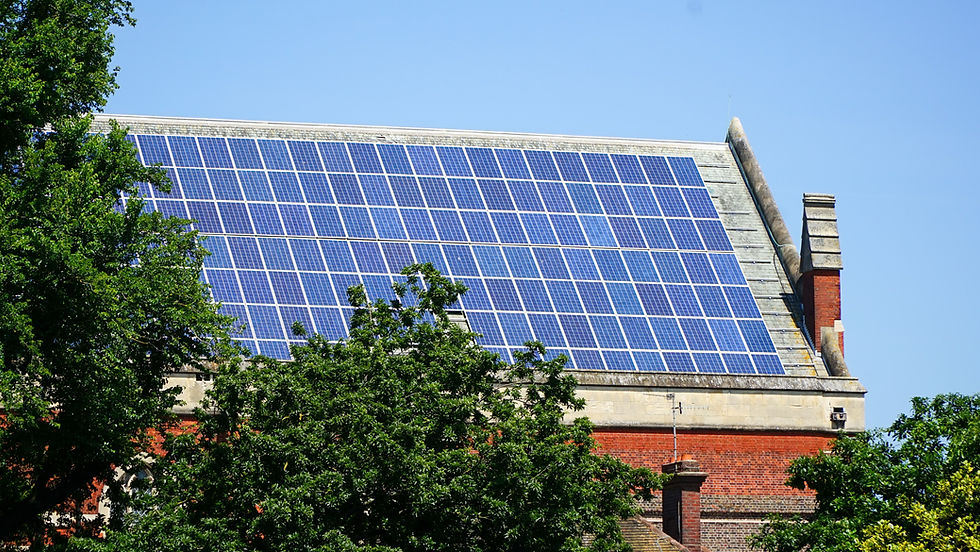
To learn more about system design and early-day generation benefits, explore our blogs “East Facing House Solar Panels” and “Morning Sun Solar Panel Performance” for practical insights and expert guidance.
Maintenance and Accessibility Implications
Install east facing solar panels with enough roof clearance and safe access points for seasonal tilt changes and cleaning. Solar Panels London recommends using a robust mounting system rated for local wind loads and considering adjustable brackets if you plan seasonal manual re‑tilt; aim for lockable, tool‑operated adjustments.
Plan a maintenance schedule: inspect mounts and seals every 12 months, clean east facing solar panels UK 1–2 times yearly in dusty areas, and check for debris accumulation after storms. Solar Panels London suggests recording tilt settings and energy output before and after any change.
When working on the roof, follow PPE and ladder safety rules or hire a qualified installer. Solar Panels London emphasizes that small gains from tilt optimisation can be lost by damage or unsafe interventions, so prioritise secure, maintainable installation methods for your east facing solar panels.


Comments