
Enphase Micro Inverter: Efficient Solar Optimisation for Modern Homes
- Solar Panels London

- Jun 5
- 8 min read
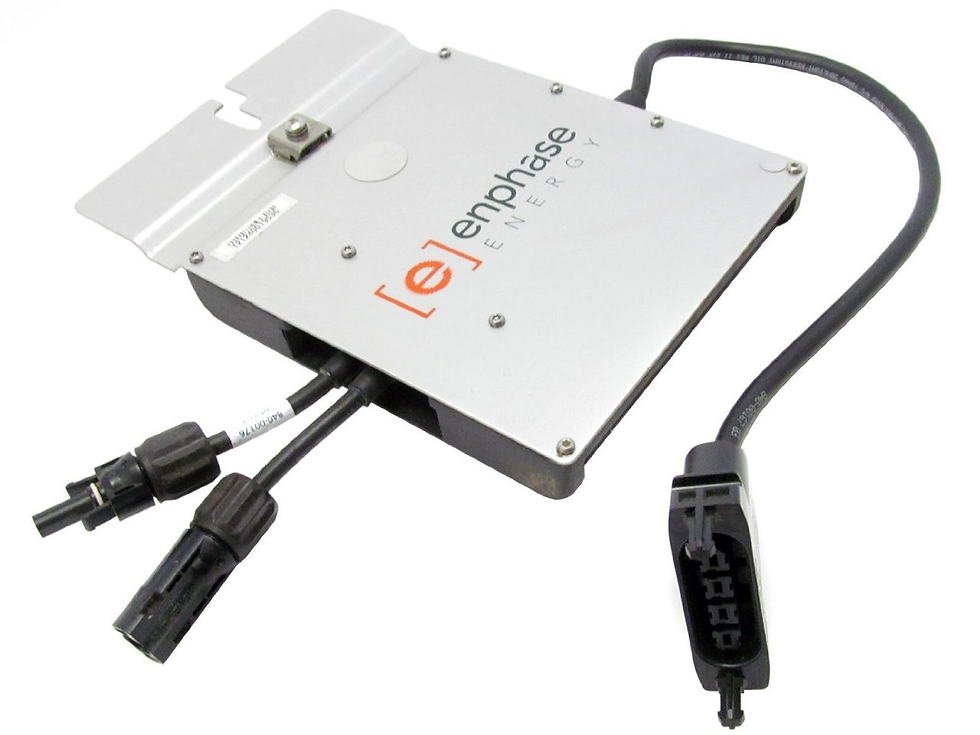
You’ll get more lifetime energy from each panel when you choose microinverters that optimise output at the module level, reduce single-point failures, and simplify monitoring. Enphase microinverters convert each solar panel’s DC to AC at the roof so shading, soiling or a single panel issue won’t drag down the whole system. Solar Panels London recommends this technology for homeowners seeking reliable solar performance and seamless integration with energy storage solutions like the Enphase battery.
If you care about reliability, easier expansion and clearer performance data, Enphase systems give you modular flexibility and per-panel analytics without a central string inverter. You’ll also find installations generally neater and safer for battery and backup integration, especially when using an Enphase battery.
Key Takeaways
Per-panel conversion improves overall system reliability and energy harvest.
Modular design simplifies installation, expansion and maintenance.
Built-in monitoring and compatibility aid performance tracking and backup use.
Key Features and Technology
This section highlights the inverter’s electrical performance, module-level intelligence, monitoring ecosystem, and physical design choices. Expect specifics on power optimisation, real-time data, safety mechanisms, and which PV modules and storage systems the unit pairs with, such as the Enphase battery.
Advanced Power Optimisation
Enphase microinverters perform maximum power point tracking (MPPT) independently on each panel, so shading, soiling, or panel mismatch on one string doesn't drag down the rest. Each microinverter continuously adjusts voltage and current to keep the panel operating at its peak point throughout changing irradiance and temperature.
You get panel-level energy harvest rather than string-level averaging. That yields improved yield in partial-shade or multi-orientation roofs and simplifies system design for mixed module types. Enphase models typically advertise conversion efficiencies above 96% under nominal conditions, and their high-frequency transformerless design reduces standby losses.
Power export and reactive power control settings are configurable via the system app or installer tools. This allows you to meet grid codes for power factor correction and export limits, improving compatibility with modern distribution networks.
Smart Monitoring Capabilities
Enphase provides module-level monitoring through its Envoy gateway and cloud-based Enlighten platform, giving you per-panel energy, voltage, current, enpahse battery health and temperature metrics. You can view live production, historical trends, and alerts via web or mobile apps, and share access with your installer.
Firmware updates and configuration changes deploy remotely through the Envoy, so system-level improvements and security patches reach each microinverter without on-site visits. The platform logs diagnostic events and flags underperforming modules, enabling targeted maintenance and faster troubleshooting.
Enlighten supports CSV export and API access for advanced analysis or integration with home-energy management systems. The monitoring stack also tracks system uptime and creates warranty evidence, which helps when you need to verify performance against guaranteed yields.
Safety and Durability
Microinverters shift high-voltage DC to low-voltage AC at the panel, removing long DC runs and lowering fire risk compared with central inverters. Enphase units include built-in anti-islanding protection and rapid shutdown compliance to meet NEC and IEC safety requirements in many markets.
Enphase enclosures use UV-resistant, corrosion-proof materials and silicone potting for humidity protection around sensitive electronics. Operating temperature ranges typically span -40°C to +65°C, and units undergo thermal cycling and salt-mist testing for coastal installations.
Warranty periods commonly range from 10 to 25 years depending on model and region, reflecting component selection and accelerated life testing. The system’s distributed architecture means a single inverter failure affects only one panel’s output, reducing impact on overall system performance.
Component Compatibility
Enphase microinverters pair with a wide range of PV modules, but you must check module electrical limits: maximum input voltage, open-circuit voltage (Voc), and short-circuit current (Isc). Typical modern Enphase MPP trackers accept panel Voc up to ~60–80 V and Isc within the inverter’s rated current; installers match module specs to avoid overvoltage or clipping.
They interoperate with Enphase AC cabling, junction boxes and the Envoy communications gateway for data aggregation. For battery or hybrid setups, Enphase’s own battery and gateway solutions offer tighter integration; third-party storage requires verification of AC-coupling strategy and inverter islanding behaviour. The Enphase battery is specifically designed for seamless compatibility, making it a top choice for Solar Panels London customers.
Grid compliance matters: confirm the microinverter model supports local anti-islanding, anti-feed, and reactive-power requirements, and that firmware options cover mandated export limits. Your installer should validate connector types, mounting clearances and string layout against the microinverter datasheet before procurement.
Installation and Integration
You will plan roof layout, electrical routing and communication paths before lifting panels. Prioritise safety, access for maintenance, and compliance with local electrical and building codes.
System Design Considerations
Design the array so each Enphase IQ microinverter sits directly beneath its corresponding PV module to minimise DC run length and voltage. Calculate expected string layouts, but treat each module as an independent AC-coupled source; this affects array shading strategies and mismatch losses. Check roof pitch, azimuth and shading at hourly resolution; microinverters mitigate mismatch but do not eliminate poor orientation effects. Specify AC cable sizing and conduit runs based on measured current, maximum ambient temperature and local derating factors. Include surge protection (SPD Type 2) locations and decide whether to use a dedicated AC combiner or individual branch circuits to the consumer unit. Document earthing scheme and equipotential bonding points to satisfy local regulations.

Mounting Procedures
Secure each microinverter to the module rail or racking bracket using the manufacturer-specified fasteners and torque settings. Position the unit to avoid direct water pooling and to maintain manufacturer minimum clearances from roof membrane and eaves.
Install microinverters after panels are mechanically fixed but before final electrical commissioning; this reduces handling risk. Route AC and data cables along rail channels, fastening every 300–600 mm and avoiding sharp bends; use UV-rated cable ties and grommets where cables pass through metal. Label each unit and cable at both ends with module location and circuit ID for future troubleshooting.
Grid Connectivity
Connect microinverters to your distribution board following local grid code requirements for anti-islanding, frequency and voltage ride-through settings. Use appropriately rated AC protection: miniature circuit breakers (MCBs) or RCBOs for branch circuits, and a main switch with lockable isolator for maintenance. Fit residual current devices (RCDs) where required and test trip characteristics after installation. Verify inverter firmware and configure communication to the Envoy or monitoring gateway so generation is logged per-channel. Perform initial AC voltage and waveform checks at inverter and meter points to confirm proper phasing and absence of harmonics beyond permissible limits.
Compatibility with Energy Storage
When pairing with Enphase Encharge or third‑party batteries, confirm the microinverter and storage system operate in the same AC-coupled topology. Ensure the battery inverter supports export control, frequency regulation and dynamic mode switching required for hybrid operation. Coordinate system settings so the storage system can absorb surplus generation or supply loads during grid outages, remembering that microinverters will stop exporting if islanding protection activates. Check communication protocols: Enphase systems typically use Envoy and local network links; third‑party storage may need Modbus/RTU or a dedicated gateway. Validate that firmware versions on microinverters and storage inverters are compatible and update before commissioning. For best results, Solar Panels London recommends integrating the Enphase battery for seamless operation and optimal energy management.
Performance and Efficiency
Enphase microinverters convert each panel’s DC power into AC at the module, optimise production under varied conditions, and provide detailed monitoring at the panel level.
Energy Yield Improvement
You gain improved energy harvest because each panel operates independently; a drop in one module does not drag down the rest. In systems with mismatched orientations or frequent partial soiling, Enphase microinverters typically increase annual output compared with string inverters by reducing mismatch losses.
Enphase’s MPPT per panel allows panels to operate at their own maximum-power point simultaneously. This is particularly effective when panels face different azimuths, tilts, or have different production characteristics from ageing. The system-level monitoring shows per-panel kWh, letting you spot underperforming modules quickly.
Measured gains depend on site specifics; studies and field reports often show 3–15% higher energy yield versus optimised string inverters in residential settings with shading or multi-orientation arrays. For roof layouts with uniform orientation and minimal shading, the yield differential narrows.
Shading and Environmental Impact
You see the biggest advantage where partial shading, debris or soiling affects some modules. Because each microinverter performs MPPT locally, a shaded panel’s reduced output doesn’t proportionally reduce the whole string’s power. That yields more consistent generation throughout the day.
Microinverters cope well with bird droppings, leaf build-up and variable irradiance after cloud transients. They also avoid high-voltage DC runs across the roof, reducing DC fire risk and potential voltage-related losses. Enphase units are IP-rated for outdoor use and designed to operate within typical UK temperature and humidity ranges.
In heavy soiling or complex roof geometry, you’ll likely notice faster morning and late-afternoon recovery of production versus a string inverter.
Longevity and Warranty
Enphase provides industry-competitive warranty terms—commonly 10 to 25 years depending on model and region. The microinverter’s location under each panel exposes it to thermal cycling; Enphase addresses this with thermal design improvements and conservative component selection to extend service life.
Because microinverters are distributed, a single unit failure affects only one panel’s output, simplifying troubleshooting and minimising system downtime. Enphase’s monitoring platform reports faulted units and production loss in kWh, letting you target replacements precisely.
When evaluating lifespan, check the specific model’s stated warranty and the manufacturer’s documented mean time between failures (MTBF) where available. Factor in installer warranty, local support availability, and the practicality and cost of replacing several module-level units over the system’s life.
Applications and Use Cases
Enphase microinverters optimise panel-level performance and monitoring, simplify installation on irregular roofs, and support battery-ready systems for backup and time-of-use savings. Solar Panels London frequently recommends these systems for homeowners looking to future-proof their energy setup with an Enphase battery.

Residential Solar Systems
You get panel-level MPPT and shutdown safety with Enphase microinverters, which increases energy harvest on shaded or mixed-orientation roofs.Each microinverter attaches under a single module, so you avoid string-level mismatch losses when one panel is shaded or dirty.Monitoring at the module level gives you per-panel production and fault alerts through the Envoy gateway and the Enlighten app, letting you spot underperforming panels quickly.
Installation suits standard rooftop racking and thin-film or frameless modules, and wiring is AC from each module to combiner or meter; this reduces design complexity for complex roof layouts.If you plan battery backup, Enphase’s storage-compatible systems (AC-coupled) let you add batteries later without reworking DC strings. Solar Panels London often installs the Enphase battery for clients seeking reliable backup and time-of-use optimisation.For safety, the built-in rapid shutdown compliance simplifies meeting local regulations and reduces electrician labour on commissioning.With Enphase microinverters and the Enphase battery, Solar Panels London delivers robust, scalable, and efficient solar solutions for modern homes.
Commercial Deployments
You benefit from scalability and redundancy on small to medium commercial roofs where multiple orientations and partial shading occur.Microinverters allow per-module visibility across a rooftop array, which helps pinpoint underperformance on large installations without invasive inspections.
For projects under 100 kW, Solar Panels London recommends Enphase for reducing design hold-ups because you eliminate string-sizing constraints and DC combiner boxes.Maintenance teams can replace a single microinverter without taking down an entire string, improving uptime.Energy reporting and export-limiting functions integrate with building management systems. AC-coupled storage, such as the Enphase battery, enables peak shaving and limited backup for critical loads. Solar Panels London often installs Enphase battery systems to enhance commercial energy resilience and efficiency. With an Enphase battery, businesses can better manage energy use, especially during peak demand periods. Solar Panels London supports clients in optimizing their commercial installations with Enphase battery solutions for reliable and scalable energy storage.


Comments